
Table of Contents
ToggleIntroduction
Firstly, welcome my Friends. If you search for What is a blog on Google, after clicking on results, you will be landed on a page called a Blogpost. Many readers asked me for this; you also want to know about it, that’s why you are here. Let’s describe it clearly.
Before YouTube tutorials, AI tools, and social media creators became mainstream, blog post were already helping people learn skills, solve problems, and make money online. Even today, blogging remains one of the most searched beginner questions because blogging is still one of the strongest ways to build traffic, authority, and long-term online income.
Many successful creators, freelancers, and online businesses still rely on blogging because search-driven content continues bringing traffic long after it’s published.
When I first started learning about blogging, one thing I noticed quickly was that most beginner guides either overcomplicated blogging or made it sound unrealistically easy. In reality, blogging becomes much easier once you understand how content, SEO, and consistency work together.
In this beginner-friendly guide, you’ll learn:
- What a blog actually is
- How blogging works
- Different types of blogs
- How bloggers make money
- Why blogging still matters in the AI search era
- How to start a successful blog step-by-step
Key Takeaways
- A blog is a regularly updated website or web page that publishes content in reverse chronological order.
- Blogging helps individuals and businesses build authority, attract search traffic, and grow online visibility.
- Different blog types include personal blogs, business blogs, affiliate blogs, lifestyle blogs, and niche blogs.
- WordPress remains the most popular blogging platform because of its flexibility and SEO capabilities.
- Blog monetization commonly happens through affiliate marketing, ads, sponsored posts, and digital products.
- SEO optimization and consistent publishing are essential for long-term blogging growth.
- Beginners can start a blog with a niche, domain name, hosting provider, and a simple content strategy.
What Is a Blog?& How Blogging Works?
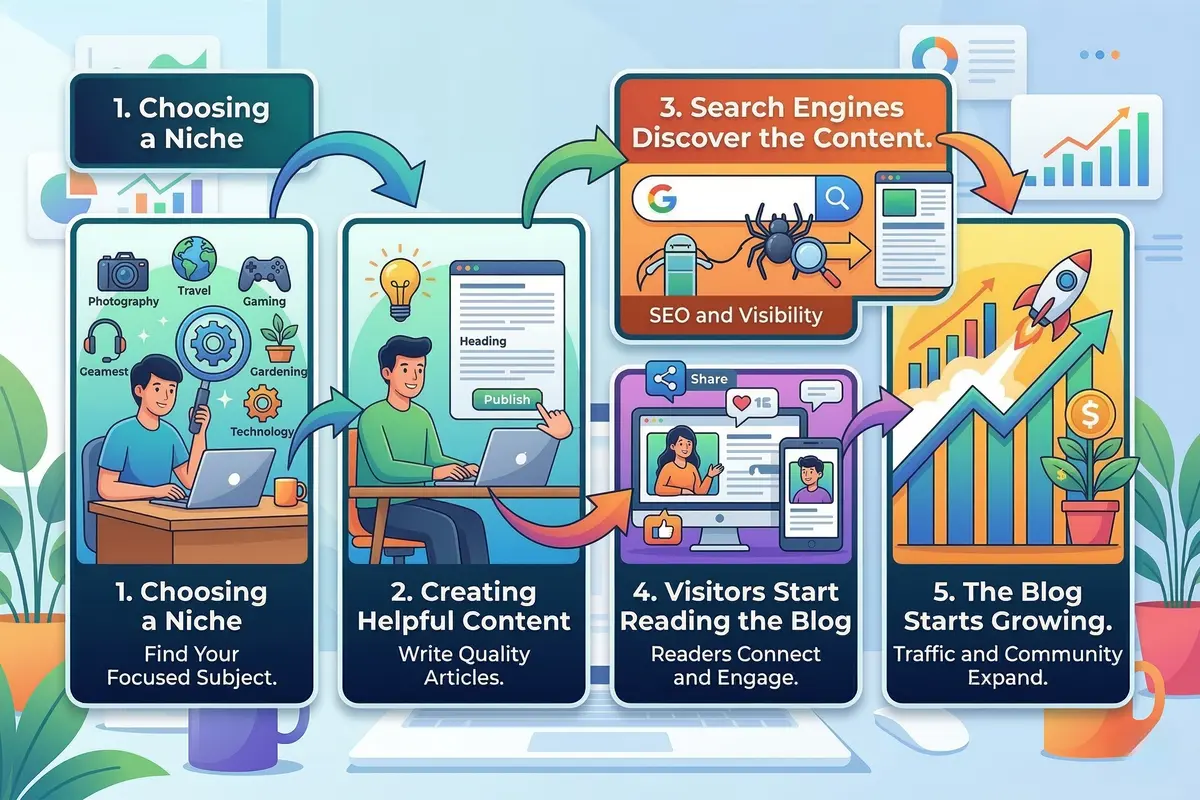
A blog is a regularly updated website or web page that publishes content in reverse chronological order. That means the newest blog posts appear first, while older posts move down the archive over time.
Still Confused? I can explain it more easily. A website where content is published in the form of articles called blog posts.
The word “blog” comes from the term weblog, which originally described online journals where people shared thoughts, experiences, or updates. Over time, blogging evolved into a professional publishing system used by creators, businesses, marketers, and publishers worldwide.
Moreover, blogs are designed for continuous publishing. Unlike static websites that rarely change, blogs grow by regularly adding fresh articles, guides, tutorials, opinions, or news updates.
For example, a fitness blog may publish:
- “Best Home Workouts for Beginners”
- “How to Lose Weight Without a Gym”
- “High Protein Meal Plan for Students”
Every blog post becomes another opportunity to attract readers from Google, AI search engines, social media platforms, and email traffic over time.
What is blogging?
Blogging is the process of creating and publishing content on a blog to share information, build an audience, and grow online visibility.
In 2026, modern blogging is no longer limited to publishing simple online articles. Today, bloggers use content to build personal brands, generate traffic, rank on Google, and even earn money online.
If you want to start your own blog, check out my post “How to Start a Blog That Makes Money.”
Most blogs include important features like:
- Categories → Help organise topics clearly
- Tags → Group related content together
- Author profiles → Build trust and credibility
- Comment sections → Increase reader engagement
- Search bars → Help users find content faster
- Internal links → Improve SEO and navigation
- Subscription forms → Grow an email audience
These features improve user experience, website structure, and SEO while making blogs easier to navigate for readers.
“A blog differs from a traditional website because blogs are updated regularly with fresh content.”
The Origin of Blogging
Blogging started in the late 1990s as simple online journals called weblogs that I said before, where people shared personal thoughts and experiences online. Over time, “weblog” became “blog,” and blogging evolved into a massive digital publishing industry.
According to recent industry data, there are now over 600 million blogs worldwide, and millions of blog posts are published daily – Source: Wix
Today, blogging is widely used for SEO growth, personal branding, affiliate marketing, lead generation, and long-term audience building.
How Blog Publishing Works
Most blogs use a Content Management System (CMS) like WordPress to create and publish content easily. A CMS helps bloggers manage their websites without needing coding skills.
A CMS makes blog management easier by helping creators:
- Write articles → Create blog posts quickly
- Add images → Make content more engaging
- Format content → Improve readability and structure
- Schedule posts → Publish content automatically later
- Optimise SEO → Help posts rank on Google
- Manage comments → Interact with readers easily
For example, when you publish a new article in WordPress, it automatically appears at the top of your blog homepage. That’s one reason why WordPress remains beginner-friendly even for people with zero technical experience.
Why Is Blogging Important in 2026?
Blogging is important in 2026 because it helps creators and businesses grow traffic, build authority, and generate long-term online income. Even with the rise of AI search tools, high-quality blog content is still one of the biggest drivers of online visibility.
Today, blogs help websites appear in:
- Google search results
- ChatGPT answers
- Google AI Overviews
- Perplexity responses
- Grok search summaries
From my experience in studying successful blogs, the websites that consistently publish genuinely useful content usually outperform websites chasing shortcuts or low-quality AI-generated articles. Every blog post creates another opportunity to rank, get discovered, and attract targeted visitors.
According to Adobe’s SEO research, AI-driven discovery is changing how users find information online, making high-quality content more valuable than ever – Source: Adobe.
Today, blogging helps creators and businesses:
- Build long-term organic traffic
- Grow authority and personal branding
- Generate leads and online income
- Increase visibility in AI-powered search results
Blogging Can Builds Long-Term Traffic
One of the biggest advantages of blogging is long-term organic traffic growth. Unlike social media posts that disappear quickly, a well-optimised blog post can bring visitors from Google for years.
This is one reason many bloggers prefer SEO-driven content over relying completely on social media platforms, where visibility disappears quickly.
According to recent industry research, companies with active blogs generate significantly more website traffic than businesses without blogs – Source: HubSpot.
That’s why blogging is still considered one of the highest-ROI digital marketing strategies today.
If you want to grow faster, learning how to get Google traffic becomes extremely important for long-term blog growth.
Blogging Builds Personal Branding
Blogging helps people build authority by consistently sharing useful knowledge online. When you consistently publish useful content, readers naturally begin associating your name with expertise in that niche.
For example, if you regularly write about SEO, I have personally noticed that creators who consistently share practical knowledge online usually build trust much faster than creators who only focus on self-promotion.
Over time, blogging can help you:
- Build trust through valuable content
- Grow a loyal audience organically
- Attract freelance clients and business opportunities
- Create partnership and collaboration opportunities
According to personal branding research, people are more likely to trust and engage with individuals who consistently share valuable content online – Source: Harvard Business School.
Blogging Creates Income Opportunities
Blogging can become a long-term online business when approached strategically and consistently. One mistake many beginners make is expecting blogging income too quickly. In most cases, traffic, authority, and monetization improve gradually through consistent publishing.
Today, bloggers make money through:
- Affiliate marketing → Earn commissions by recommending products
- Display ads → Generate income from website traffic
- Sponsored content → Get paid by brands for promotions
- Digital products → Sell eBooks, courses, or templates
- Coaching services → Turn expertise into consulting income
Many bloggers first explore blogging after learning how to make money online through content and SEO.
Blogging helps businesses and creators attract organic traffic, build authority, and generate online income.
That’s why blogging is still one of the most scalable and beginner-friendly online business models in 2026.
What Is the Difference Between a Blog and a Website?
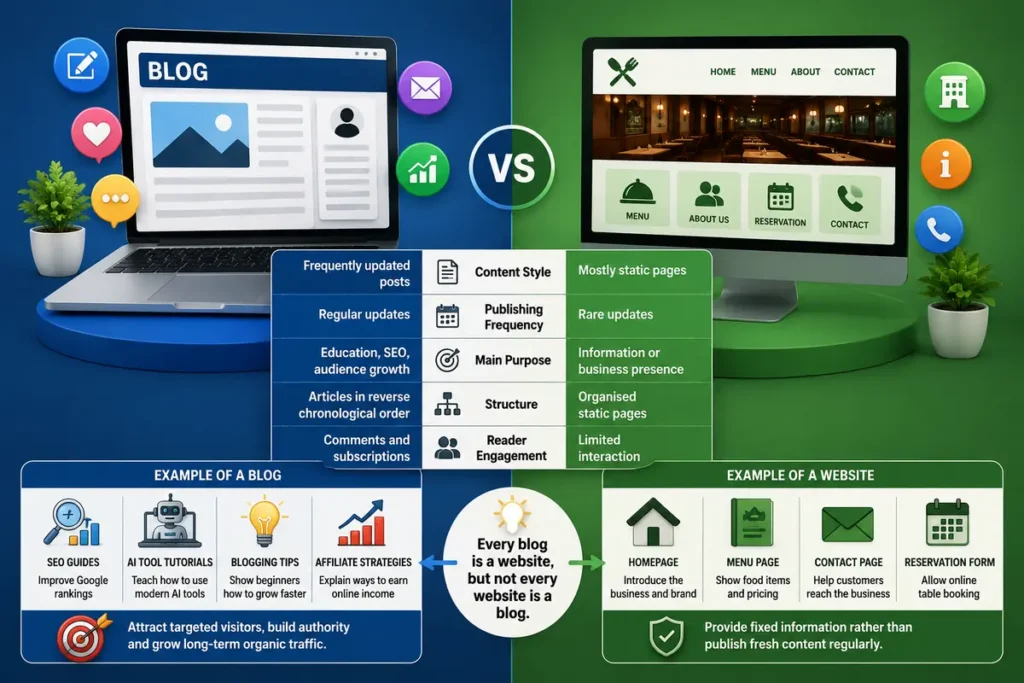
A blog is a type of website focused on regularly updated content, while a traditional website usually contains static pages.
That’s why many beginners confuse blogs and websites, because both exist online under domain names.
However, their structure and purpose differ significantly.
Feature | Blog | Website |
Content Style | Frequently updated posts | Mostly static pages |
Publishing Frequency | Regular updates | Rare updates |
Main Purpose | Education, SEO, audience growth | Information or business presence |
Structure | Articles in reverse chronological order | Organised static pages |
Reader Engagement | Comments and subscriptions | Limited interaction |
Example of a Blog
A digital marketing blog usually publishes helpful content that teaches readers how to grow online. These blogs focus on solving problems, sharing strategies, and driving search traffic through SEO.
For example, a blogging or marketing website may publish:
- SEO guides → Help readers improve Google rankings
- AI tool tutorials → Teach how to use modern AI tools
- Blogging tips → Show beginners how to grow faster
- Affiliate marketing strategies → Explain ways to earn online income
This type of content helps blogs attract targeted visitors, build authority, and grow long-term organic traffic.
Example of a Website
A traditional website usually focuses on providing important business or company information instead of publishing regular articles.
For example, a restaurant website may include:
- Homepage → Introduce the business and brand
- Menu page → Show food items and pricing
- Contact page → Help customers reach the business
- Reservation form → Allow online table booking
Unlike blogs, most websites do not update content frequently. Their main goal is to provide fixed information rather than publish fresh content regularly.
That’s why people often say:
“Every blog is a website, but not every website is a blog.”
What Are the Different Types of Blogs?
Different blog types exist because creators use blogging for different goals, audiences, and monetization strategies. Some blogs focus on personal experiences, while others are built to grow businesses, generate traffic, or make money online.
Personal Blogs
Personal blogs are created to share real-life experiences, opinions, and personal stories online. These blogs are more personality-driven and help creators connect with readers on a deeper level.
For example:
- Travel blogs → Share travel experiences and destination guides
- Lifestyle blogs → Cover daily life, habits, and personal interests
- Parenting blogs → Help parents with tips, stories, and advice
Many successful creators originally started with simple personal blogs before building audiences and online businesses around their content.
Business Blogs
Business blogs help companies attract customers through valuable SEO-focused content. Instead of directly selling products, these blogs educate readers, solve problems, and build trust over time.
For example, many businesses publish:
- Tutorials → Teach users how to use products or services
- Case studies → Show real results and success stories
- Industry guides → Share expert tips and insights
SaaS companies, digital agencies, and online businesses use blogs heavily to increase organic traffic, generate leads, and build authority in their industry.
Niche Blogs
Niche blogs focus on one specific topic instead of covering multiple unrelated subjects. This helps bloggers attract a targeted audience and build authority faster in their niche.
Popular niche blog examples include:
- Fitness blogs → Share workout, diet, and health tips
- Finance blogs → Teach saving, investing, and money management
- Gaming blogs → Cover gaming news, reviews, and tutorials
- AI blogs → Explain AI tools, trends, and automation strategies
I have seen many beginner bloggers struggle because they start with extremely broad topics and later realise it’s difficult to compete without a strong niche focus.
Choosing one of the best blogging niches can make it easier to grow traffic and authority as a beginner.
Affiliate Blogs
Affiliate blogs recommend products or services and earn commissions when readers make purchases through affiliate links. These blogs usually focus on reviews, comparisons, and buying guides that help users make better decisions.
For example:
- Product reviews → Share honest opinions and recommendations
- Comparison articles → Compare tools, apps, or gadgets
- Buying guides → Help readers choose the right product
The affiliate blogs that usually perform best are the ones that provide honest recommendations and genuinely helpful comparisons instead of aggressively pushing products.
Portfolio Blogs
Portfolio blogs help freelancers and professionals showcase their skills, experience, and expertise online. These blogs work like a digital portfolio that also builds trust through valuable content.
For example:
- Writers → Share articles and writing samples
- Designers → Showcase creative projects and case studies
- Developers → Publish coding tutorials and project work
So, freelancers use portfolio blogs to attract clients, build credibility, and create a stronger personal brand online.
News Blogs
News blogs publish trending updates and the latest industry developments regularly. These blogs focus on delivering fresh information quickly to keep readers updated.
For example:
- Tech news blogs → Cover new apps, gadgets, and AI updates
- Finance news blogs → Share market and business news
- Gaming news blogs → Publish gaming launches and updates
News blogs usually post content more frequently because trending topics change very fast.
Lifestyle Blogs
Lifestyle blogs cover multiple personal-interest topics instead of focusing on just one niche. These blogs are usually more personal, creative, and community-driven.
Popular lifestyle blog topics include:
- Fashion → Share style tips and outfit ideas
- Travel → Publish travel guides and experiences
- Productivity → Teach habits and time management
- Wellness → Cover health, mindset, and self-care
Many lifestyle bloggers build loyal audiences by sharing relatable content, personal experiences, and everyday inspiration.
How Do Bloggers Make Money Online?
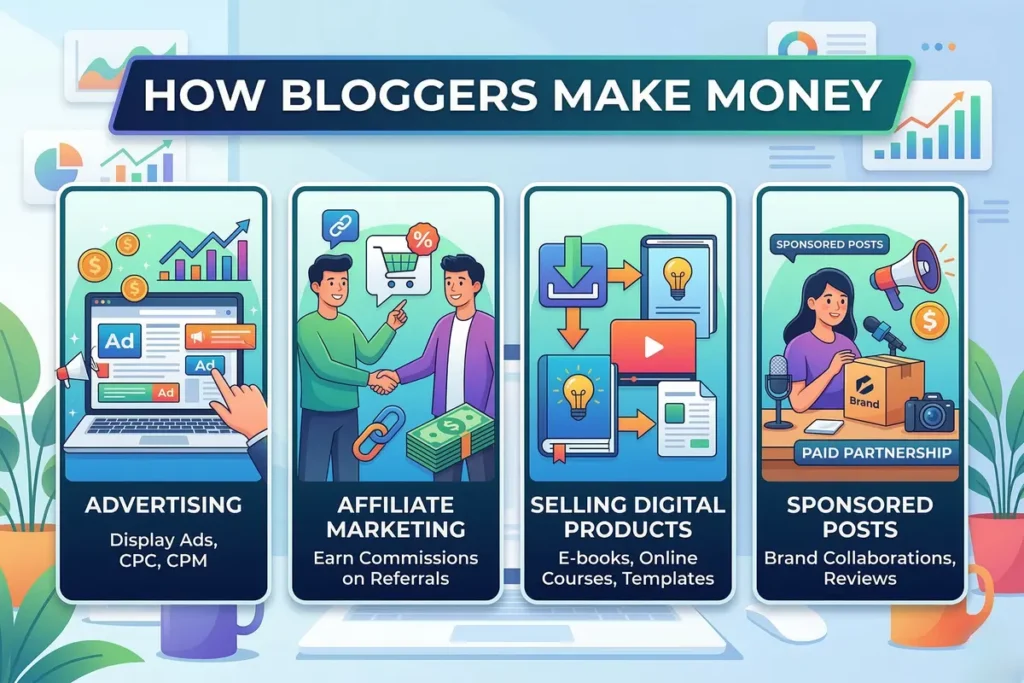
Bloggers make money online through affiliate marketing, display ads, sponsored posts, digital products, memberships, and freelance leads.
A blog works more like a long-term traffic and trust-building asset that can later generate multiple income opportunities.
Affiliate Marketing
Affiliate marketing is one of the most popular ways bloggers make money online. Bloggers recommend products or services using affiliate links and earn commissions when readers make a purchase.
For example:
- Product reviews → Help readers choose the right products
- Comparison posts → Compare tools, apps, or gadgets
- Buying guides → Recommend products for specific needs
A hosting review blog, for instance, may recommend hosting companies and earn commissions for every signup through affiliate links.
Read “Affiliate Marketing for Beginners” to begin your online affiliate journey.
Display Advertising
Display advertising helps bloggers earn money from website traffic through ads placed on their blogs. Bloggers usually get paid based on pageviews, clicks, or ad impressions.
Popular advertising platforms include:
- Google AdSense → Beginner-friendly ad network
- Mediavine → Higher earnings for growing blogs
- Ezoic → AI-powered ad optimization platform
Blogs with steady search traffic can generate recurring passive income through display ads. In some cases, a single high-ranking article can continue generating ad revenue for years.
Sponsored Posts
Sponsored posts are paid partnerships between brands and bloggers. Companies pay bloggers to create content that promotes their products, services, or tools to a targeted audience.
For example:
- Product reviews → Share detailed opinions about a product
- Brand collaborations → Promote services through blog content
- Sponsored tutorials → Show how a product works in real use cases
A software company, for instance, may pay a blogger to review a tool or create a tutorial around its features. Bloggers with trusted audiences and steady traffic often earn well through sponsored content.
Digital Products
Many bloggers sell digital products to earn income directly from their audience. Unlike ads, digital products usually offer higher profit margins because there are no shipping or inventory costs.
Popular digital products include:
- Ebooks → Share knowledge in downloadable format
- Online courses → Teach skills step-by-step
- Templates → Save users time with ready-made resources
- Checklists → Provide quick actionable guidance
Successful bloggers often use digital products to turn their expertise into scalable online income.
Freelance Leads
Blogging can help freelancers attract clients naturally through valuable content. When people find helpful articles on your blog, they start trusting your expertise and may contact you for services.
For example:
- SEO guides → Attract businesses looking for SEO experts
- Writing tutorials → Bring freelance writing opportunities
- Case studies → Show real skills and results to clients
A content writer publishing useful SEO articles, for instance, may receive freelance inquiries directly from readers searching on Google.
That’s why many freelancers use blogging not just for traffic, but also to build authority and generate consistent client leads online.
If you want to understand the difference between freelancing and blogging, in my opinion you should read my detailed guide here: Freelancing vs Blogging: Which One Is Better in 2026?
What Are the Main Parts of a Blog?
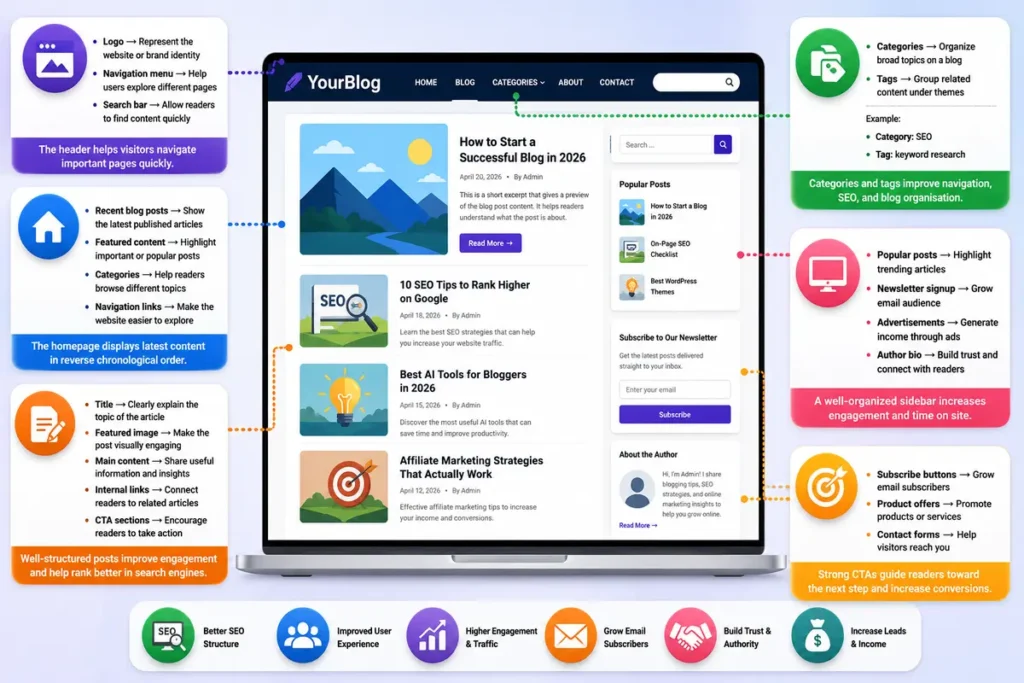
The main parts of a blog include the header, homepage, blog posts, categories, sidebar, comments, and CTA sections.
Now, let’s understand how the basic blog structure helps to improve SEO, navigation, and overall user experience.
Header
The header is the top section of a blog or website that helps visitors navigate important pages quickly. It is usually the first thing users see when they open a website.
A blog header commonly includes:
- Logo → Represent the website or brand identity
- Navigation menu → Help users explore different pages
- Search bar → Allow readers to find content quickly
A clean and simple header improves user experience and makes website navigation easier for visitors.
Homepage
The homepage is the main page of a blog where visitors usually see the latest published content first. It helps readers quickly explore recent articles and discover new topics.
Most blog homepages display:
- Recent blog posts → Show the latest published articles
- Featured content → Highlight important or popular posts
- Categories → Help readers browse different topics
- Navigation links → Make the website easier to explore
Most blogs organize posts in reverse chronological order, meaning the newest articles appear at the top of the homepage.
Blog Posts
Blog posts are the individual articles readers visit to learn information, solve problems, or explore a topic. Each blog post usually focuses on one specific subject and is designed to be easy to read and navigate.
A typical blog post includes:
- Title → Clearly explain the topic of the article
- Featured image → Make the post more visually engaging
- Main content → Share useful information and insights
- Internal links → Connect readers to related articles
- CTA sections → Encourage readers to take action
Well-structured blog posts improve user experience, increase engagement, and help blogs perform better in search engines.
Categories and Tags
Categories and tags help organise blog content so readers can find information more easily. They also improve website structure and help search engines understand your content better.
For example:
- Categories → Organize broad topics on a blog
- Tags → Group related content under specific themes
A blogging website may use:
- Category: SEO → Cover all SEO-related articles
- Tag: keyword research → Group posts about keyword strategies
Using categories and tags properly improves navigation, user experience, and overall blog organisation.
Sidebar
The sidebar is a secondary section of a blog that displays extra content and useful navigation elements. It helps readers discover more information while browsing the website.
A blog sidebar may include:
- Popular posts → Highlight trending or useful articles
- Newsletter signup → Help grow an email audience
- Advertisements → Generate income through display ads
- Author bio → Introduce the blogger and build trust
A well-organized sidebar improves user engagement and encourages visitors to spend more time on the blog.
CTA Sections
It stands for Call-To-Action, which encourages readers to take a specific action after reading your content. CTA sections are important because they help blogs increase engagement, grow audiences, and generate leads.
Common CTA examples include:
- Subscribe buttons → Grow email subscribers
- Product offers → Promote products or services
- Contact forms → Help visitors reach the blogger or business
Strong CTA sections guide readers toward the next step instead of letting them leave the website without interaction.
How Can Beginners Start a Blog Step-by-Step?
Beginners can start a blog by choosing a niche, buying a domain, setting up hosting, installing WordPress, and publishing optimized content.
Now, blogging is much easier today than it was years ago because modern tools simplify setup.
Step 1: Choose a Niche
A niche is the main topic your blog focuses on. Choosing the right niche is important because it helps you attract the right audience and build authority faster.
Popular blog niche examples include:
- Fitness → Share health and workout tips
- SEO → Teach search engine optimization strategies
- AI tools → Cover AI apps and automation tutorials
- Finance → Help readers manage and grow money
- Personal development → Share productivity and self-improvement advice
In my experience analysing beginner blogs, smaller, more focused niches usually grow faster because they target a clearer audience with less competition.
For example:
- “Fitness” → Too broad and highly competitive
- “Fitness for busy students” → More targeted and easier to grow
Specific niches usually grow faster because they target clearer audiences with lower competition.
Step 2: Buy a Domain and Hosting
A domain and hosting are the two main things you need to launch a blog online. Your domain is your website name, while hosting stores your blog files and makes your website accessible on the internet.
Here’s what they do:
- Domain name → Your blog’s web address (example: yourblog.com)
- Web hosting → Stores your website data online
- SSL certificate → Helps secure your website connection
- Hosting dashboard → Lets you manage your blog easily
Popular hosting providers include:
- Hostinger → Affordable and beginner-friendly
- Bluehost → Popular WordPress hosting option
- SiteGround → Known for speed and support
Choosing reliable hosting is important because website speed, uptime, and security directly affect SEO and user experience.
Step 3: Install WordPress
WordPress is the most popular blogging platform in the world because it is flexible, beginner-friendly, and highly SEO optimized. It allows bloggers to create professional websites without needing advanced coding skills.
According to recent W3Techs data, WordPress powers over 42% of all websites on the internet – Source: W3Techs.
WordPress is popular because it offers:
- Easy customisation → Change designs using themes
- SEO flexibility → Optimise content for Google rankings
- Plugin support → Add extra features without coding
- Scalability → Grow from a small blog to a large website
That’s why most professional bloggers and businesses still prefer WordPress in 2026.
Step 4: Publish Your First Blog Post
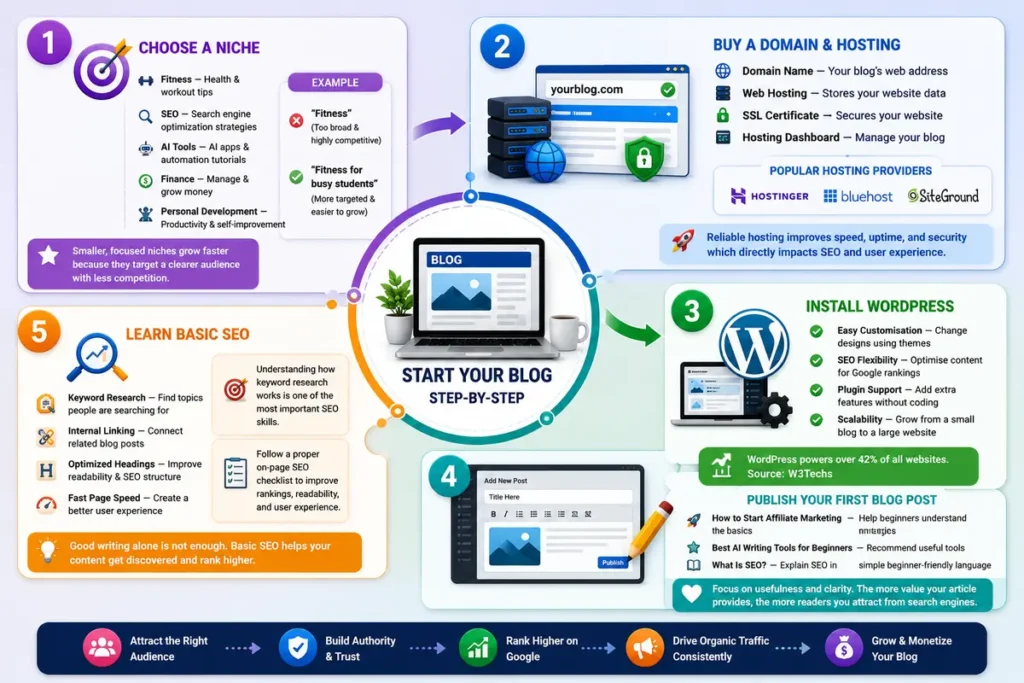
Your first blog post should focus on solving one clear problem for readers. Almost every successful blogger started with imperfect articles before improving through practice, publishing, and real audience feedback. Helpful, targeted content performs much better than random, directionless writing.
Good beginner blog post examples include:
- “How to Start Affiliate Marketing” → Help beginners understand the basics
- “Best AI Writing Tools for Beginners” → Recommend useful tools and platforms
- “What Is SEO?” → Explain SEO in simple beginner-friendly language
In the beginning, focus more on usefulness and clarity instead of trying to sound overly professional. The more value your article provides, the higher the chances of attracting readers from Google and AI search platforms.
Step 5: Learn Basic SEO
SEO helps blogs rank higher in search engines and attract organic traffic from Google and AI search platforms. Even simple SEO improvements can make a big difference in blog growth over time.
Important beginner SEO tasks include:
- Keyword research → Find topics people are searching for
- Internal linking → Connect related blog posts together
- Optimized headings → Improve readability and SEO structure
- Fast page speed → Create a better user experience
Understanding how keyword research works is one of the most important SEO skills for beginner bloggers.
Following a proper on-page SEO checklist can improve rankings, readability, and user experience.
One thing many beginners realise too late is that good writing alone is not enough. Without basic SEO, even valuable content can remain invisible in search results. The more helpful content you publish around one niche, the easier it becomes to grow traffic and build authority online.
Which Blogging Platform Is Best for Beginners?
WordPress is the best blogging platform for most beginners because it offers customisation, SEO flexibility, and scalability.
First, beginners should choose platforms based on long-term goals.
Platform | Best For | Pros | Cons |
WordPress | Serious blogging | SEO-friendly, flexible | Slight learning curve |
Blogger | Simple hobby blogs | Free | Limited customization |
Medium | Writing audience | Built-in readers | Limited ownership |
Substack | Newsletter blogging | Easy email monetization | Limited SEO control |
WordPress
WordPress is ideal for professional blogging because it offers powerful customisation, strong SEO features, and long-term flexibility. It is beginner-friendly enough for new bloggers while still advanced enough for large business websites.
WordPress supports:
- SEO plugins → Help improve Google rankings
- Themes → Change the website design easily
- Monetisation tools → Support ads, affiliate links, and online stores
- Advanced customisation → Add features without heavy coding
That’s why WordPress remains the most popular blogging platform for creators, businesses, and professional bloggers worldwide.
Blogger
Blogger is a beginner-friendly blogging platform owned by Google. It is simple to use and works well for people who want to start blogging without dealing with technical setup.
Blogger offers:
- Easy setup → Create a blog in just a few minutes
- Free hosting → Start blogging without hosting costs
- Google integration → Connect with AdSense and other Google tools
- Simple dashboard → Manage posts easily as a beginner
However, Blogger has limited customisation and scalability compared to WordPress. That’s why many bloggers eventually move to WordPress when they want more control, SEO features, and long-term growth.
Medium
Medium is a simple publishing platform designed for writers who want instant access to an existing audience. Unlike traditional blogging platforms, Medium focuses more on writing and content discovery rather than website customisation.
Medium is popular because it offers:
- Built-in audience → Reach readers without starting from zero
- Simple editor → Write and publish without technical setup
- Clean design → Focus more on content readability
- Easy publishing → Start blogging within minutes
It helps beginners to grow an audience quickly before building their own independent blog website. According to TechRadar, Medium remains one of the most popular platforms for audience-focused blogging and content discovery in 2026.
Substack
Substack combines blogging with email newsletters in one platform. It allows creators to publish articles while also building a direct subscriber audience through email.
Substack is popular because it offers:
- Newsletter integration → Send blog posts directly to subscribers
- Simple publishing → Write and publish without technical setup
- Paid subscriptions → Earn from premium content
- Audience ownership → Build a direct connection with readers
Writers and creators use Substack to grow loyal communities and monetize content through newsletters instead of relying only on search traffic.
Can Blogging Help With SEO and AI Search Rankings?
Blogging helps improve SEO and AI search rankings by creating useful, searchable, and authoritative content. Every new blog post gives search engines another opportunity to index your website and rank it for relevant keywords.
For example, publishing detailed guides regularly helps blogs increase keyword coverage, build topical authority, and attract long-term organic traffic.
Blogging improves online visibility by helping websites:
- SEO content → Help websites rank on Google
- Topical authority → Build expertise in one niche
- Keyword targeting → Reach people searching online
- AI visibility → Increase chances of appearing in AI answers
Search engines and AI platforms prefer websites that consistently publish high-quality, well-structured, and helpful content. That’s why blogging still plays a major role in digital growth strategies in 2026.
Blogging Supports Topical Authority
Topical authority means becoming highly trusted in one specific subject area. Search engines and AI platforms usually prefer websites that consistently publish detailed content around the same topic.
For example, an SEO blog covering topics like:
- Keyword research → Help users find search opportunities
- Link building → Improve website authority and rankings
- Technical SEO → Optimise website performance and indexing
- Content optimisation → Create SEO-friendly blog content that builds much stronger authority than publishing random, unrelated articles.
From what I have observed, blogs that stay focused on one niche usually grow much faster than websites that constantly jump between unrelated topics.
Blogs Improve AI Visibility
Blogs improve AI visibility by helping AI systems understand and extract useful information from your content. Platforms like ChatGPT, Perplexity, and Google AI Overviews often prefer content that is clear, well-structured, and easy to summarize.
Content with these elements usually performs better in AI search:
- Clear definitions → Help AI understand topics quickly
- Structured headings → Improve content organization
- Concise answers → Increase citation opportunities
- Helpful explanations → Build trust and authority
According to Adobe research, AI-generated referral traffic is growing rapidly as more users rely on AI-powered search experiences — Source: Adobe
That’s why modern blogging is no longer only about Google rankings. It’s also about becoming visible inside AI-generated answers and search summaries.
Blogging Creates Long-Term Search Assets
One well-optimised blog post can continue generating traffic from Google and AI search platforms for years after publication. Unlike social media content that quickly loses visibility, helpful blog articles remain searchable and discoverable over time.
This helps blogs:
- Generate long-term organic traffic → Bring visitors consistently
- Increase keyword rankings → Rank for more search terms over time
- Build evergreen content → Stay useful for years after publishing
- Grow authority gradually → Strengthen SEO performance continuously
That’s why many businesses and creators treat blogging as a long-term digital asset instead of just short-term content marketing.
How Often Should You Publish Blog Posts?
Publishing 1–3 high-quality blog posts per week is a good starting point for most beginner blogs. Consistency matters far more than publishing large amounts of low-quality content.
For example:
- 1 quality article weekly → Build steady long-term growth
- Consistent publishing → Improve SEO and audience trust
- Helpful content → Increase engagement and rankings
- Regular updates → Keep blogs active and relevant
In most cases, publishing one high-quality article weekly works better than posting low-value content every day. Search engines and readers both prefer content that provides real value instead of just higher volume.
Quality Beats Quantity
Search engines care more about content quality than publishing volume. Helpful, original, and well-structured articles usually perform much better than thin or copied content.
High-quality blog content should focus on:
- Helpful content → Solve real problems for readers
- Original insights → Add unique value and experiences
- User satisfaction → Keep readers engaged and informed
- Strong structure → Improve readability and SEO performance
Many new bloggers burn out quickly because they focus too much on publishing volume instead of improving content quality and usefulness.
Content Consistency Builds Trust
Consistent publishing helps blogs build trust with both readers and search engines. When you regularly post helpful content, your blog looks more active, reliable, and trustworthy over time.
Consistent blogging helps:
- Build audience trust → Readers expect regular valuable content
- Improve SEO signals → Search engines notice active websites
- Increase returning visitors → People come back for new posts
- Grow authority gradually → Stronger credibility in your niche
In reality, consistency is one of the biggest reasons some blogs slowly grow while others disappear after a few months.
What Are the Biggest Blogging Mistakes Beginners Make?
The biggest blogging mistakes include choosing broad niches, ignoring SEO, publishing inconsistently, copying competitors, and avoiding email list building.
Choosing a Broad Niche
- Broad topics create heavy competition.
For example, “digital marketing” is harder than “AI blogging for beginners.”
Ignoring SEO
- SEO helps people discover your content.
Without SEO, even great articles struggle to get traffic.
Publishing Inconsistently
- Many beginners quit too early.
According to SEO industry research, most blogs take 3–6 months to start seeing noticeable organic traffic growth – Source: ExpertSEO
Copying Competitors
- Copied content rarely builds authority.
Instead, add original examples and experiences.
Not Building an Email List
- Email subscribers give bloggers direct audience access.
Platforms change constantly, but email lists remain owned assets.
What Skills Do You Need to Become a Blogger?

You do not need to become an expert before starting a blog. Blogging skills usually improve much faster through real publishing experience than through endlessly consuming tutorials without taking action.
Important blogging skills include:
- Content writing → Writing clearly and simply helps readers understand your content more easily.
Learning practical content writing tips for beginners can improve readability and audience engagement significantly.
- SEO knowledge → Basic SEO helps blogs rank higher and attract organic traffic from Google.
- Keyword research → Find topics people are actively searching for online.
- Internal linking → Connect related articles to improve SEO and navigation.
- Title optimisation → Create better headlines that attract clicks and rankings.
- Research skills → Good bloggers verify facts and provide accurate information readers can trust.
- Consistency → Publishing regularly builds momentum, authority, and long-term blog growth.
What Tools and Platforms Help Bloggers Grow Faster?
Blogging tools help creators publish content faster, improve SEO, and manage content more efficiently. The right tools can save time, increase productivity, and help blogs grow faster online.
SEO Tools
SEO tools help bloggers find keywords, track rankings, and optimise content for search engines.
Popular SEO tools include:
- Ahrefs → Analyse keywords and backlinks
- Semrush → Research SEO and content strategies
- Google Search Console → Track website performance on Google
These tools help bloggers improve rankings, grow organic traffic, and understand what people are searching for online.
AI Writing Tools
AI writing tools help speed up content research, outlines, and writing workflows. Many bloggers use AI tools to generate ideas, organize content, and improve productivity.
AI tools can help with:
- Content research → Find ideas and information faster
- Blog outlines → Structure articles more efficiently
- Writing workflows → Save time during content creation
- Content optimization → Improve readability and structure
From my experience reviewing AI-generated content, articles perform much better when creators add personal insights, practical examples, and real human editing instead of publishing raw AI drafts.
Design Tools
Design tools help bloggers create visual content that improves engagement and branding.
Popular design tools like Canva help create:
- Pinterest pins → Drive traffic from Pinterest
- Blog banners → Improve website design and branding
- Infographics → Explain information visually
Good visuals make blog content more engaging, shareable, and easier to understand for readers.
What Should You Do Next After Learning About Blogging?
After understanding the basics of blogging, the next step is to start taking action instead of waiting for the perfect setup. Most successful bloggers improve their skills gradually while publishing content consistently.
Here are the best next steps for beginners as a Quick Recap:
- Choose one niche → Focus on a specific topic you genuinely enjoy and understand.
- Buy a domain → Create a professional identity for your blog online.
- Install WordPress → Set up a flexible and SEO-friendly blogging platform.
- Publish one helpful article → Start with content that solves a real problem for readers.
- Learn SEO fundamentals → Understand basic SEO to grow organic traffic over time.
- Build topical authority gradually → Publish related content consistently within your niche.
Most importantly, focus on helping real people instead of chasing shortcuts. Helpful and experience-driven content usually performs much better than generic articles in both Google and AI search platforms.
FAQ
Q1. Is blogging still worth it in 2026?
Blogging is still highly valuable in 2026 because blogs help creators and businesses generate organic traffic, build authority, grow personal brands, and earn online income through SEO and AI search visibility.
Q2. Can beginners start a blog without technical skills?
Yes, beginners can easily start a blog today using platforms like WordPress, Blogger, or Substack without learning coding or advanced technical skills.
Q3. How long does it take for a blog to get traffic?
Most blogs take around 3–6 months to start getting noticeable organic traffic, especially when content is published consistently with proper SEO optimization.
Q4. What is the best blogging platform for beginners?
WordPress is considered the best blogging platform for beginners because it offers strong SEO features, easy customization, and long-term flexibility for blog growth.
Q5. Can i start blogging in zero investment?
Yes, but WordPress(paid) is far better that blogger(free) , Free platforms always have limitations.
Conclusion
Blogging in 2026 is much more than simply writing articles online. A blog can become a long-term digital asset that helps you build authority, grow organic traffic, create personal branding, and generate online income over time.
The biggest advantage of blogging is that your content keeps working even after you publish it. One helpful and SEO-optimised article can continue bringing traffic, leads, and opportunities for years, unlike social media posts that disappear quickly.
The best part?
Most successful bloggers did not start with expert knowledge, expensive tools, or huge audiences. They improved gradually by learning SEO, publishing consistently, and focusing on helping readers.
So, start simple:
- Choose a niche – Publish articles – Learn SEO – Focus on helping readers – Stay consistent even when growth feels slow.
Over time, your blog can become one of the most valuable online assets you own.
Now I want to hear from you:
If you started a blog today, what topic would you write about first?
Share your idea in the comments – I genuinely love to know what niche you’re thinking about.
Written by: Pratap Keshari Panda – SEO-focused content creator, digital marketing strategist, and blogging growth specialist with expertise in organic traffic, AI-driven content strategies, and online business growth.
Reviewed by: Editorial SEO Review Team – Experts in SEO optimisation, AI search visibility, content quality, and organic growth strategy.

 350+ Blog Guides Published


13 Comments
Your comment is awaiting moderation.
Downloading the client was a breeze and it runs beautifully in the background while I browse other tabs. The wealth themed collections are packed with high limit options for those who like bigger stakes. I also appreciate how responsive the live chat team is when I need help with a deposit match. Highly recommend for serious players. Head over here wealthdt3gamedownload
[…] Before building a successful blog, it’s important to understand what blogging actually is and how … […]
[…] Blogging remains one of the most reliable ways to build a long-term passive income system online. […]
[…] you are completely new to blogging, first understand how blogging works and makes money before focusing heavily on traffic strategies like […]
[…] you are completely new to online income, first understand what blogging is and how it makes money, so you can see how blogging fits as a long-term side […]
[…] you’re still confused about the basics, this guide on what blogging is and how it makes money will help you understand the foundation […]
[…] you are completely new to online earning, first understand what blogging is and how it makes money before starting […]
[…] what blogging actually is and how it works, I strongly recommend reading this beginner guide on what blogging is and how it makes money. It will clear your basics […]
[…] creating a free blog, it’s important to understand what is a blog and how it actually […]
[…] If you’re new to online earning, you should also understand the basics of blogging. Here is a simple beginner guide on what blogging is and how it works. […]
[…] the way, if you are completely new to online earning, you should first read my guide on “What Is Blogging and How It Makes Money.” It will give you a clear foundation before comparing freelancing vs […]
[…] If you want to understand blogging basics, read my post “What is Blogging and How It Makes Money.” […]
[…] If you are new to blogging, read my post “What is Blogging and How It Makes Money.” […]
[…] can read more details about how to start blogging by clicking here; this is the most popular way to know how to make money online in […]