
Table of Contents
ToggleIntroduction
If you think affiliate marketing without a website doesn’t work, you’ve been learning from the wrong sources.
Most beginners waste months building websites that never make money – while others start earning using simple traffic-first strategies. Based on real affiliate workflows and proven beginner methods, this guide breaks down exactly how to start affiliate marketing without a website and generate your first commissions faster.
When I first explored affiliate marketing, I also thought building a website was mandatory. But after testing traffic-focused methods, I realised platforms like social media and YouTube can generate clicks and commissions much faster for beginners.
Key Takeaways
- Affiliate marketing without a website allows users to earn commissions by promoting products through platforms like social media, YouTube, or email.
- Traffic sources replace websites as the primary driver of conversions in this model.
- Social media, video content, and email marketing are the most effective methods for beginners.
- Consistent content creation and audience trust directly impact affiliate earnings.
- Beginners can start with zero cost using free platforms and affiliate programs.
- Focusing on one traffic source produces faster results than spreading efforts.
- Scaling requires systems like email lists or paid ads, not just manual posting.
What Is Affiliate Marketing Without a Website?
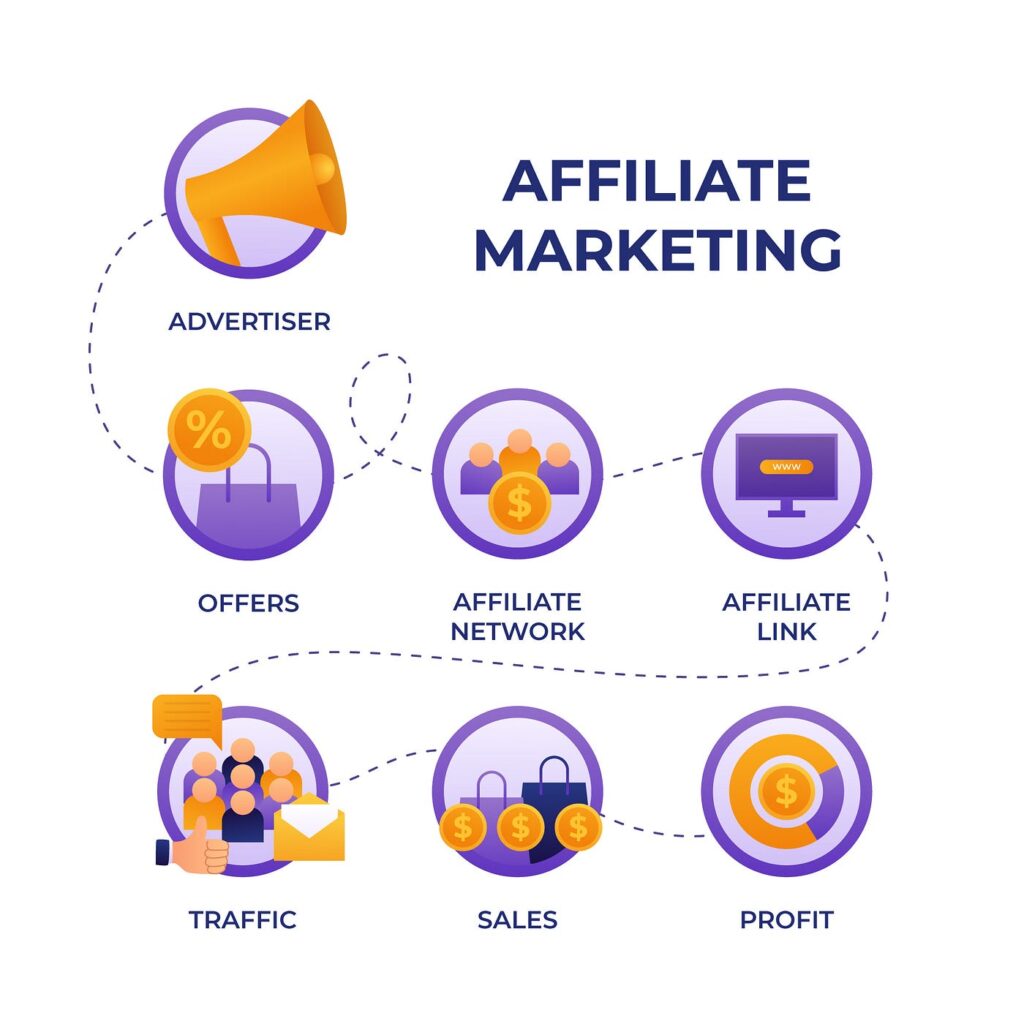
Affiliate marketing without a website is the process of promoting products through third-party platforms and earning commissions without owning a domain.
Affiliate marketing is a performance-based model in which you promote products using unique tracking links and earn a commission for each sale.
You don’t actually need a website because traffic → content → affiliate link → sale is the real system.
One thing I noticed early is that most beginners quit before starting because they think affiliate marketing requires technical setup, hosting, and SEO knowledge.
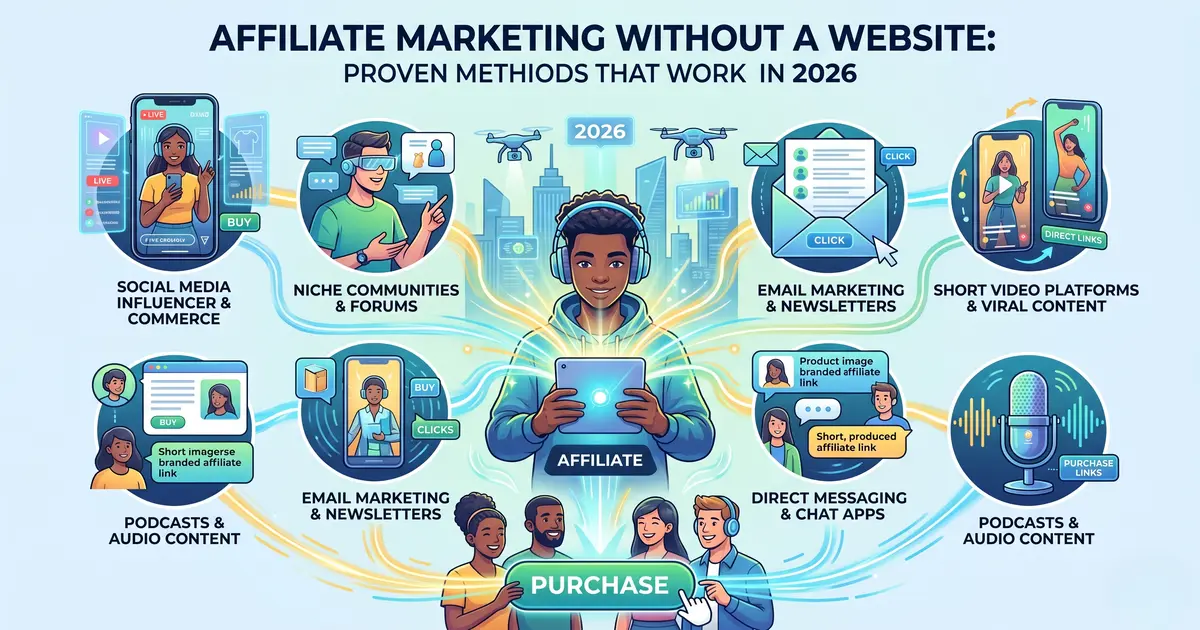
For example, instead of writing blog posts, you can promote products through Instagram reels, YouTube videos, or email newsletters.
If you’re completely new, first understand the fundamentals through our guide on affiliate marketing basics explained.
Why Affiliate Marketing Without a Website Matters?
Affiliate marketing without a website matter because it removes cost, complexity, and time barriers for beginners.
You avoid technical setup like hosting, domains, and SEO learning.
For example, building a blog can take months for traffic to start coming in, while a TikTok video can generate clicks within hours.
Also, you can start with zero investment.
Beginners can start affiliate marketing without a website using free platforms and zero upfront investment.
It’s faster to validate ideas.
For example, you can test 5 niches on Instagram in a week instead of building 5 websites.
Industry Insight:
- Affiliate marketing is a $17–18.5+ billion global industry and is projected to exceed $20 billion by 2026 – Source: Post Affiliate Pro (Industry Report)
- Over 80% of brands use affiliate marketing programs to drive sales – Source: MarketingLTB Affiliate Statistics
- Affiliate marketing often contributes around 10–30% of total revenue for many brands – Source: WeCanTrack Affiliate Statistics
This is not a side hustle trend. It’s a real business model.
Understanding how affiliate links work is important because tracking determines how commissions are credited.
How Does Affiliate Marketing Without a Website Actually Work?
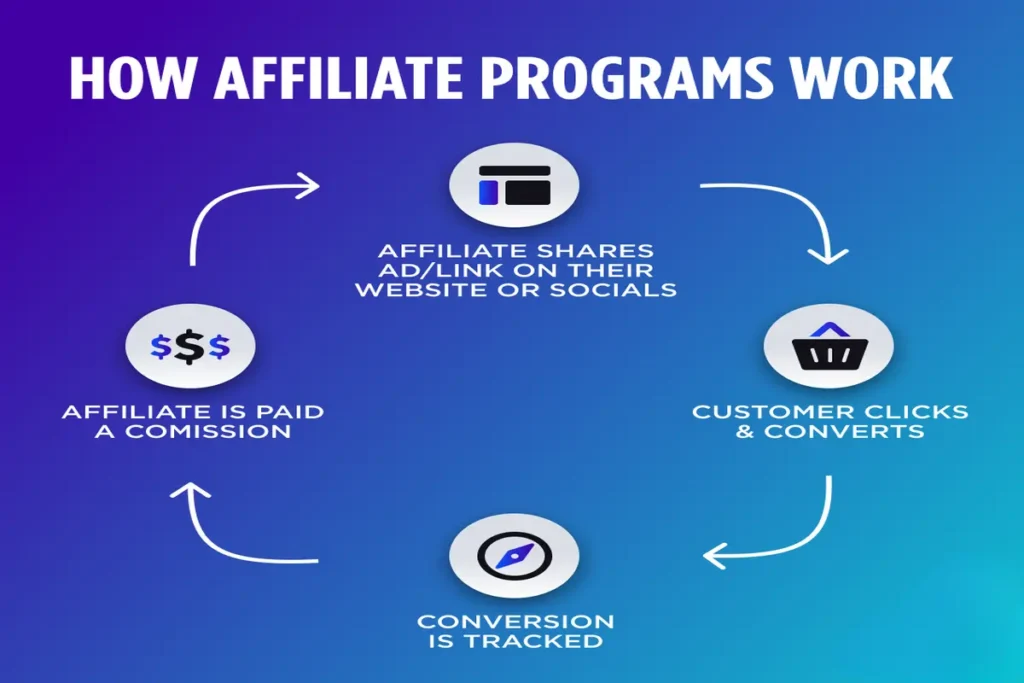
Affiliate marketing without a website works by using content-driven traffic sources to send users directly to affiliate offers.
Let’s break the core model:
Traffic → Content → Link → Conversion
- Traffic Source: Instagram, YouTube, email, forums
- Content: Reviews, tutorials, recommendations
- Link: Affiliate tracking URL
- Conversion: User buys → you earn
The most effective way to succeed without a website is to focus on one traffic source and build audience trust.
Learn how to build an audience online With an mail list that helps you to improve long-term affiliate conversions and repeat traffic.
Why Trust Is the Real Currency?
Most importantly, people don’t click links – they follow recommendations.
For example, a YouTuber reviewing a product converts better than random spam links.
And, platforms reward engagement.
For example, TikTok pushes content that people watch and interact with.
Trust + consistency = conversions.
What Are the Best Platforms for Affiliate Marketing Without a Website?
The best platforms for affiliate marketing without a website are social media, YouTube, email marketing, and third-party content platforms.
Read to know the Top 10 Best Affiliate Programs for Beginners in 2026.
Let’s break them down:
1. Social Media (Instagram, TikTok, Facebook)
It is the process of promoting products through short-form or feed content and directing users to affiliate links via bio or posts.
This is the fastest entry point for beginners.
Why Important?
Social media is important because it provides instant reach without needing SEO or a website.
- Platforms push content via algorithm
- You don’t need followers initially
- Viral potential = fast traffic
Social commerce is growing at around 30% annually, driven by platforms like TikTok and Instagram – Source: TechRadar (Affiliate Marketing 2025 Report)
How It Works?
Social media works by creating attention-first content that leads users to your affiliate link.
Workflow:
- Create short content (Reels, TikTok, posts)
- Hook attention in the first 3 seconds
- Add CTA (link in bio / DM/comment)
- Drive traffic → affiliate offer
A proper Faceless YouTube channel can turn videos into long-term passive traffic assets
For example:
- “Top 3 Budget Gadgets Under ₹999” reel
- Add affiliate links in bio
- Use trending audio
One viral reel = thousands of clicks.
Monetization
Social media monetisation comes from high-volume clicks and impulse-buying behaviour.
- Low-ticket products (Amazon, gadgets)
- Viral content → high traffic → commissions
- Multiple links via Linktree
Short-form content works best when combined with proven strategies for how to get free traffic online.
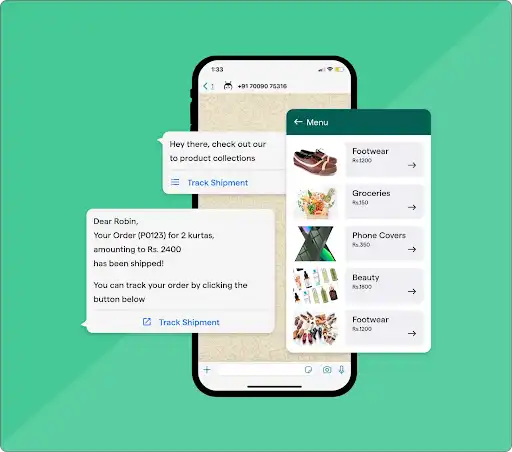
2. YouTube (Long Videos + Shorts)
YouTube affiliate marketing is the process of promoting products through videos and placing affiliate links in descriptions or pinned comments.
Why Important
YouTube is important because it builds trust and drives high-conversion traffic.
- People search before buying
- Content stays for years (evergreen)
- Higher intent audience
Affiliate links are widely used across YouTube, with studies analyzing over 2 million videos showing their strong presence – Source: Research Study on YouTube Affiliate Marketing (2026)
How It Works
YouTube works by ranking videos in search and recommending them via an algorithm.
Workflow:
- Create review/tutorial videos
- Optimize title (problem-based)
- Add affiliate link in description
- Build trust through explanation
For example:
- “Best AI Tools for Blogging (2026)”
- Add 5 affiliate tools in the description
- Explain each with a demo
Each video becomes a long-term asset.
Monetization
YouTube monetization is driven by high-intent traffic and trust-based conversions.
- High-ticket offers (courses, SaaS tools)
- Recurring commissions (subscriptions)
- Multiple income streams (ads + affiliates)
Trust = higher earnings per click.
Read more ways to make money online without showing your face.
3. Email Marketing
An email marketing affiliate strategy is the process of building an email list and promoting affiliate products directly through newsletters or sequences.
Why Important
Email marketing is important because you own the audience and are not dependent on algorithms.
- No reach drop like Instagram
- Direct communication
- High conversion rates
This is where real money scales.
How It Works
Email marketing works by capturing leads and nurturing them before sending affiliate offers.
Workflow:
- Offer free lead magnet (PDF/tool)
- Collect email
- Send value emails
- Promote affiliate offers
Relationship → conversion.
For example:
- Free guide: “Top 10 AI Tools”
- Collect emails
- Send weekly tool recommendations
Each email = repeat revenue opportunity.
Monetization
Email monetization comes from repeat promotions and high trust.
- High ROI channel
- Recurring income
- Product launches
Small list > large random audience.
4. Paid Ads (Advanced Strategy)
Paid ads affiliate marketing is the process of buying traffic and directing it to affiliate offers or landing pages.
Why Important
Paid ads are important because they allow instant scaling without waiting for organic growth.
- Immediate traffic
- Predictable results
- Scalable system
This is how pros scale.
How It Works
Paid ads work by targeting specific audiences and optimising conversion rates.
Workflow:
- Choose an offer
- Create ad creative
- Run ads (Facebook/Google)
- Track conversions
For example:
- Run Facebook ads for a weight loss product
- Target fitness audience
- Send traffic to the offer page
Winning ad = scalable income.
Monetization
Paid ads monetization depends on ROI (Return on Investment).
- Spend ₹1000 → Earn ₹2000
- Scale budget
- Repeat
5. Third-Party Platforms (Medium, LinkedIn, Pinterest, Forums)
Third-party platforms are content publishing sites where you can post articles or content and include affiliate links without owning a website.
Why Important
These platforms are important because they provide built-in traffic and authority.
- No SEO needed
- Platform trust already exists
- Easier ranking
Shortcut to visibility.
How It Works
These platforms work by leveraging their existing audience and search traffic.
Workflow:
- Write content (articles/posts)
If you’re interested in knowing how to create a free blog and make money, This link is for you.
- Insert affiliate links naturally
- Rank on the platform or Google
Platform traffic → your link.
For example:
- Write an article on Medium: “Best AI Tools for Students”
- Add affiliate links
- Share on LinkedIn
Content works like a mini blog.
Monetization
Monetization comes from targeted traffic and search-based intent.
- Blog-style content
- SEO-lite traffic
- Long-term passive clicks
It’s Slow but gives you stable income.
Most beginners fail because they:
- Try ALL platforms
- Stay inconsistent
- Don’t build trust
The real strategy:
Pick ONE platform → Go all in for 30 days → Then scale.
How Do Beginners Start Affiliate Marketing with Zero Investment?
Beginners start affiliate marketing without investment by choosing one platform, one niche, and one offer, then consistently creating content.
Follow this exact workflow:
1. Choosing a Niche
A niche is a specific audience segment with a clear problem that you can solve using affiliate products.
Not “fitness” – but “home workout for beginners”.
Why Important
Niche selection is important because it directly affects conversions, competition, and earning potential.
- Broad niche = low trust
- Focused niche = high conversion
Affiliate marketing conversion rates typically range between 1% and 3%, but highly targeted audiences can achieve significantly higher results – Source: WeCanTrack
Specific audience = more money.
How It Works
Niche works by aligning content with a specific audience problem and matching it with the right product.
Process:
- Identify problem (e.g., weight loss)
- Narrow it (busy professionals)
- Match product (home workout program)
Problem → Solution → Product.
For example:
- Niche: “AI tools for bloggers”
- Content: “Best AI tools for writing blogs”
- Product: AI writing software
Laser focus = faster growth.
Monetization
Niche monetization works by targeting high-intent users who are ready to buy.
- High-ticket niches (AI, finance) → high commissions
- Mass niches (gadgets) → volume
Smart niche = easier money.
In my experience, focused niches grow faster because the audience trusts specific recommendations more than general content.
2. Joining Affiliate Programs
Affiliate programs are platforms where companies give you unique links to promote their products and earn commissions.
Why Important
Affiliate programs are important because they provide the products, tracking, and payouts.
- No product creation
- No inventory
- No customer supports
You focus only on marketing.
How It Works
Affiliate programs work by tracking clicks and sales through your unique referral link.
Flow:
- Get the affiliate link
- Share it
- User buys
- You earn commission
Simple system, but execution matters.
For example:
- Join ClickBank
- Promote a weight loss product
- Earn 50–75% commission
Digital products = higher margins.
Monetization
Affiliate monetization depends on commission structure and product pricing.
- Low-ticket: ₹100–₹500 per sale
- High-ticket: ₹2000–₹10,000+ per sale
Same effort, different payouts.
Choosing the best niche for affiliate marketing can significantly improve conversions and audience targeting
3. Picking ONE Traffic Source
A traffic source is the platform where your audience discovers your content and clicks your affiliate links.
Why is it important
Traffic source focus is important because spreading across platforms kills consistency and growth.
- Beginners fail due to distraction
- Algorithms reward consistency
Focus = growth.
How It Works
Traffic sources work by distributing your content to users based on an algorithm or search intent.
Examples:
- Instagram → algorithm
- YouTube → search + recommendation
- Email → direct reach
Platform = distribution engine.
For example:
- Choose Instagram
- Post 2 reels daily
- Grow followers → drive traffic
One platform done right beats five done poorly.
Monetization
Traffic monetization depends on volume and intent.
- Social media → volume
- YouTube → trust
- Email → repeat sales
I’ve seen many beginners fail simply because they try to grow on every platform at the same time instead of mastering one source first.
Traffic = income source.
4. Creating Content Consistently
Content creation is the process of producing value-driven posts that attract, educate, and convert an audience.
Why Important
Content is important because it is the only way to generate traffic without paying for ads.
Content = growth engine.
How It Works
Content works by solving problems and guiding users toward a product decision.
Types:
- Reviews
- Tutorials
- Comparisons
Solve → suggest → convert.
For example:
- “Best Free AI Tools for Students”
- Explain tools
- Add affiliate links
Some of the best-performing affiliate content is often simple and consistent—not highly edited or perfect.
Value-first content wins.
Monetization
Content monetization comes from embedding affiliate links naturally within helpful content.
- More content → more entry points
- More trust → higher conversions
Consistent publishing is one of the most effective ways to learn how to get free traffic online organically.
Content = long-term asset.
5. Adding Affiliate Links + Tracking
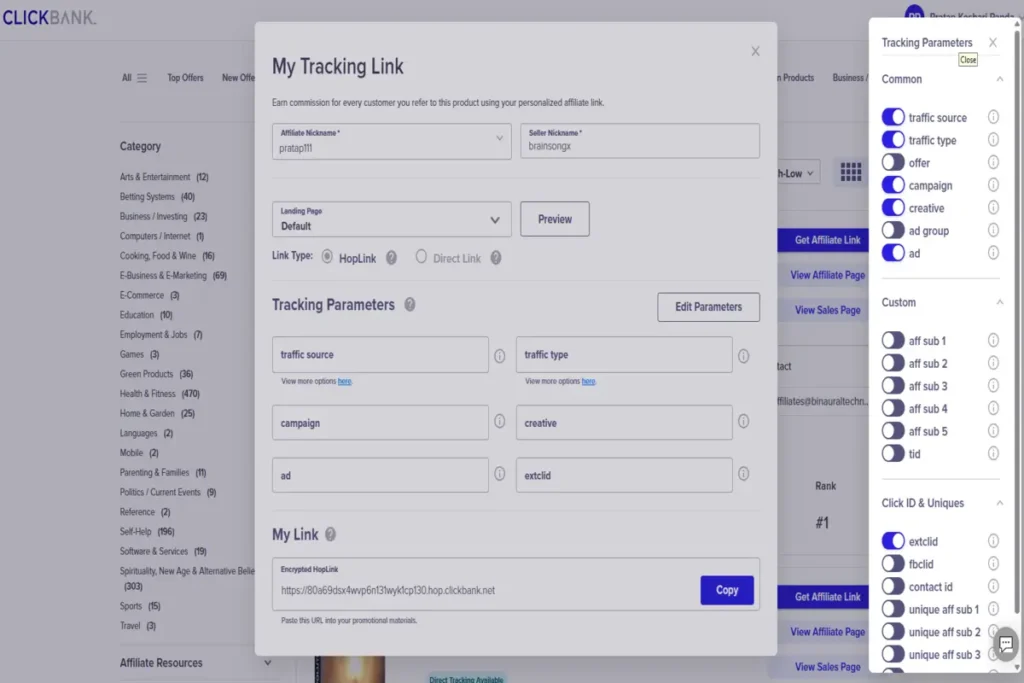
Affiliate links are unique URLs that track clicks and sales generated by your content.
Why Important
Affiliate links are important because they connect your traffic to your earnings.
No link = no income.
How It Works
Affiliate links work by tracking user activity from click to purchase using cookies or tracking IDs.
For example:
- Add link in bio
- Add link in YouTube description
- Add CTA: “Check link below”
Placement matters.
Monetization
Link monetization depends on clicks × conversion rate × commission.
Formula:
Income = Traffic × Conversion Rate × Commission
Businesses earn an average return of $6.50 for every $1 spent on affiliate marketing — Source: FirstPromoter Affiliate Marketing Statistics
That’s why brands pay you.
Final strategy:
- Pick a niche
- Pick ONE platform
- Post daily for 30 days
- Track → improve
That’s it.
Beginners should start with trusted platforms listed in our guide to top affiliate programs for beginners.
Which Traffic Source Works Best Without a Website?
The best traffic source without a website is the one you can stay consistent with and scale over time.
Here’s a quick comparison:
Traffic Source | Best For | Speed | Conversion Strength | Monetization Style | Use When |
Instagram / TikTok | Fast reach | Fast | Medium (~1–1.5%) (wecantrack) | Volume-based (low-ticket) | Quick traffic + beginners |
YouTube | High trust | Medium ⏳ | High (~2%+) (wecantrack) | High-ticket + recurring | Long-term income |
Email Marketing | Stability | Slow | Very High (2–5%) (Invesp) | Repeat sales | Build a long-term system |
Paid Ads | Scaling | Fast | Depends on targeting | ROI-based | When you have a budget |
Medium / Forums | Passive traffic | Medium ⏳ | Medium | SEO-like income | If you prefer writing |
Key Insight (This is what most miss)
social media = attention game
YouTube = trust game
Email = relationship game
Ads = math game
Final Verdict (Start with no Confusion)
For Beginners? → Instagram / TikTok
If you are serious? → YouTube
Long-term Income? → Email list
For Scale? → Paid ads
How Do You Get Your First Affiliate Sale Without a Website?
You get your first affiliate sale by solving a specific problem for a targeted audience using content and trust.
- Pick a high-intent product → Choose something people are already searching to buy (not just browsing).
- Target a specific problem → Focus on “solution content,” not random promotion.
- Create one strong content piece → A reel, video, or post that clearly explains the product benefit.
- Hook attention instantly → First 3 seconds decide whether you get clicks or get ignored.
- Show real value or result → Demonstrate how the product actually solves the problem.
- Add a clear CTA (Call-to-Action) → Tell users exactly what to do (“Check link in bio”).
- Place your affiliate link strategically → Bio, description, or pinned comment for easy access.
- Drive targeted traffic daily → Consistency beats perfection every time.
- Build trust before selling → People buy recommendations, not links.
- Track clicks and optimize content → Improve what works, remove what doesn’t.
Affiliate traffic converts at an average rate of 1%–3% across industries, while highly targeted campaigns can achieve significantly higher results – Source: NewMedia Affiliate Marketing Statistics (2026)
That Means:
- 100 clicks ≠ 100 sales
- You need volume + trust + consistency
From what I’ve observed, beginners usually get their first sale after improving content consistency and targeting rather than changing affiliate programs repeatedly.
Do this daily for 7–14 days → you’ll either get your first sale or know exactly what to fix.
Is Affiliate Marketing Without a Website Profitable in 2026?
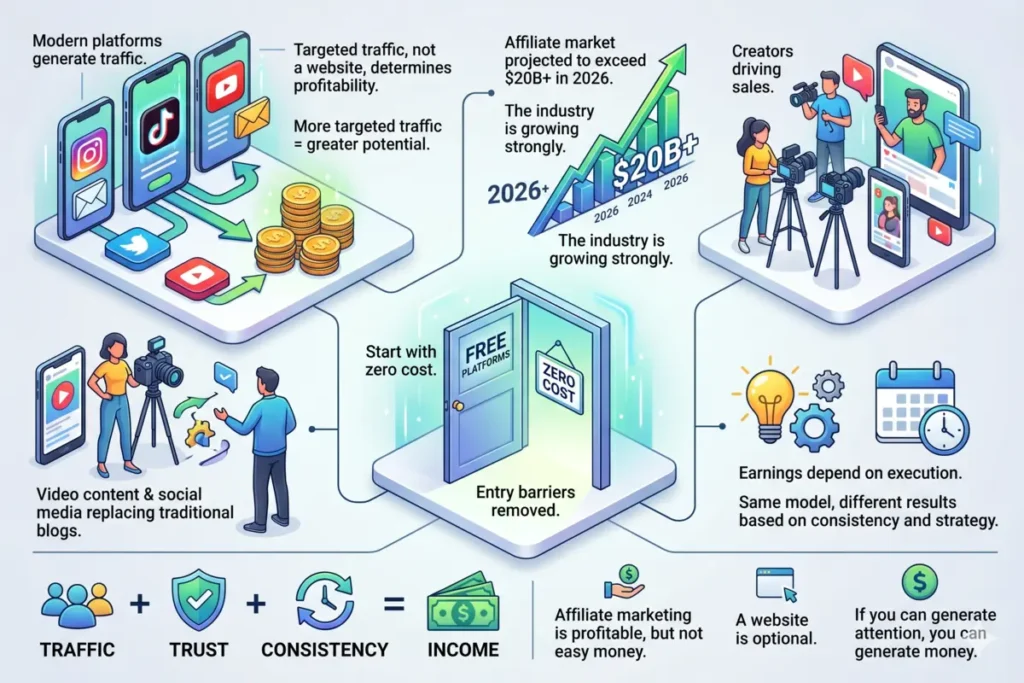
Affiliate marketing without a website is profitable in 2026 because modern platforms like social media, YouTube, and email allow you to generate traffic and earn commissions without owning a website.
- Profitability depends on traffic, not a website → More targeted traffic = more earning potential
- The industry is growing strongly → The affiliate market is projected to exceed $20B+ in 2026
- Creators are driving sales now → social media + video content are replacing traditional blogs
- You can start with zero cost → Free platforms remove entry barriers completely
- Earnings depend on execution → Same model, different results based on consistency and strategy
Affiliate marketing is profitable, but not easy money. A website is optional.
Traffic + trust + consistency = income
If you can generate attention, you can generate money.
What Are the Biggest Mistakes Beginners Make Without a Website?
The biggest mistakes beginners make are related to lack of focus, poor strategy, and inconsistent execution – not the absence of a website.
- Promoting random products → No niche focus = no trust = no sales
- Spamming affiliate links → Looks desperate and reduces credibility instantly
- Not building an audience → Traffic without connection doesn’t convert
- Jumping between platforms → No consistency = no growth
- Posting without strategy → Content without intent doesn’t drive clicks
- Ignoring value creation → People don’t buy unless you help first
- Expecting fast money → Unreal expectations lead to early quitting
- Not tracking performance → You can’t improve what you don’t measure
- Copying others blindly → What works for them may not work for your audience
- Quitting too early → Most people stop before results start
A common pattern I’ve noticed is that beginners focus too much on links and too little on audience trust.
Avoiding these common affiliate marketing mistakes can save months of wasted effort.
Do You Eventually Need a website to Scale Affiliate Marketing?
You don’t need a website to start affiliate marketing, but you eventually need one to scale, control, and stabilise your income long-term.
- You can start without a website → Social media, YouTube, and email can generate your first sales easily
- A website becomes important for scaling → It gives you full control over content, branding, and traffic
- Platforms are risky for long-term growth → Algorithms and rules can change anytime, affecting your income
- A website builds authority and trust → Helps you look more professional and credible to both users and affiliate networks
- SEO traffic only comes with a website → Long-term passive traffic needs search engine visibility
- Affiliate networks prefer websites → Some programs require content or authority before approval
- Scaling needs systems, not just content → Website + email + funnels = stable income engine
Start without it. Scale with it.
Tools & Platforms You Can Use (No Website Required)
Affiliate marketing tools help you create content, manage links, track performance, and earn commissions without needing a website.
- Affiliate Networks → Get products + links to promote (Amazon, ClickBank, etc.)
- Link-in-Bio Tools → Store multiple affiliate links in one place (Linktree, Beacons)
- Content Scheduling Tools → Automate posting to stay consistent (Buffer, Hootsuite)
- Email Marketing Tools → Build audience and promote repeatedly (MailerLite, ConvertKit)
- Content Creation Tools → Create reels, videos, and posts (Canva, CapCut)
- Analytics & Tracking Tools → Track clicks and optimize performance (Bitly, dashboards)
Tools don’t make money – execution does.
What’s Next (Action Plan)
Your next step is to take immediate action by following a simple, focused plan instead of overthinking the process.
Pick your niche today → Don’t research for weeks, decide and start
- Join one affiliate program → Get your first product and link ready
- Choose ONE platform → Focus on Instagram, YouTube, or email only
- Create your first content immediately → Action beats planning every time
- Post daily for the next 7 days → Consistency builds momentum fast
- Add your affiliate link properly → Make it easy for users to click
- Track clicks and engagement → Improve based on real data
- Double down on what works → Repeat winning content patterns
- Ignore everything else → Focus removes confusion and speeds results
- Aim for first sale, not perfection → Progress > perfection
Beginners succeed faster when they take action early instead of waiting – consistent content and focused effort are key to results
Start today → First results follow.
Frequently Asked Questions (FAQs)
Q1. Can You Really Start Affiliate Marketing Without a Website?
Yes, affiliate marketing without a website is completely possible using platforms like Instagram, YouTube, email, and other content channels to drive traffic and promote affiliate links.
Q2. Which Platform Is Best for Affiliate Marketing Without a Website?
YouTube is best for long-term trust and conversions, while Instagram and TikTok are best for fast traffic and beginner-friendly growth.
Q3. How Much Money Can Beginners Make Without a Website?
Beginner earnings vary based on traffic, niche, and consistency, but affiliate marketing can become highly profitable once content and audience trust grow consistently.
Q4. Do You Need Money to Start Affiliate Marketing Without a Website?
No, beginners can start affiliate marketing for free using free traffic platforms and free affiliate programs like ClickBank or Amazon Associates.
Q5. How Long Does It Take to Get the First Affiliate Sale?
Most beginners take a few weeks to get their first affiliate sale, depending on content consistency, traffic quality, and offer selection.
Conclusion
Success in affiliate marketing without a website comes down to one thing – execution.
You can start earning online by focusing on traffic, content, and audience trust instead of technical setup.
You don’t need a website to start because platforms like social media, YouTube, and email already give you access to an audience.
It is not about shortcuts – it’s about smart execution using available platforms.
Traffic + trust + consistency = income
After analysing how beginners approach affiliate marketing, one thing becomes clear: the people who stay consistent usually outperform those looking for shortcuts.
Now I want to know from you
Are you starting affiliate marketing without a website, or are you still stuck thinking you need one?
Comment “START” if you’re serious, or “STUCK” if you’re confused – I’ll guide you next
Written by Pratap Keshari Panda – Digital marketing strategist helping beginners build AI-powered income systems.
Reviewed by Digital Marketing Experts Team – Specialized in SEO, affiliate marketing, and growth systems.

 350+ Blog Guides Published

2 Comments
Your comment is awaiting moderation.
Being a big football fan in Mexico I needed a betting platform that speaks my language and offers great odds on local leagues. This site checks every box with its straightforward design and quick customer service. Kick off your fun mxsportiumbetmexico
[…] If you’re starting without a website for affiliate income, start with this How to Start Affiliate Marketing Without a Website (Beginner-Friendly, Step-by-Step Guide) […]
[…] you want a side hustle with low investment, this guide on affiliate marketing without a website explains how beginners can start without a technical […]