Table of Contents
ToggleIntroduction
Publishing blog posts regularly sounds easy until you sit down to write and realise how much time goes into research, outlining, drafting, and editing. That’s exactly why many bloggers are learning how to use AI to write blog posts more efficiently – not to replace human creativity, but to speed up the writing process while maintaining quality.
After personally using AI tools to create and optimise hundreds of blog articles, I’ve found that the best-performing content always combines AI-generated drafts with human expertise, real examples, and proper SEO optimisation.
In this guide, I’ll show you the exact workflow I use to create high-quality blog posts faster without sacrificing originality or search rankings.
Key Takeaways
- AI blog writing is the process of using artificial intelligence tools to assist with researching, outlining, drafting, and editing blog content.
- AI-assisted blogging involves combining machine-generated drafts with human expertise, editing, and fact-checking to create valuable content.
- Keyword research remains the foundation of successful AI-generated content.
- Detailed prompts produce significantly better blog drafts than generic instructions.
- Human editing improves trust, readability, and SEO performance.
- AI tools are most effective when used as writing assistants rather than complete replacements for human writers.
- Consistency beats perfection when building a successful blog.
What Is AI Blog Writing and How Does It Work?
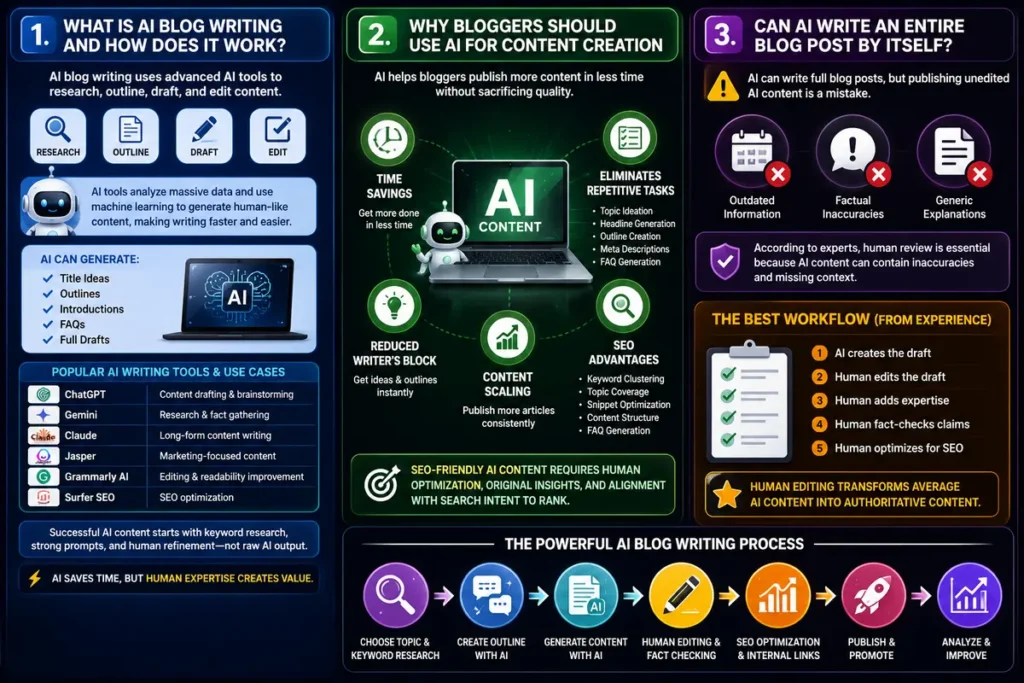
AI blog writing is the process of using artificial intelligence tools to assist with researching, outlining, drafting, and editing blog content.
Mainly, AI writing tools analyse vast amounts of text data and use machine learning models to predict and generate human-like content. Instead of replacing writers, these tools help speed up content creation while reducing manual effort.
For example, you can provide a keyword such as “how to start a blog” and an AI tool can generate title ideas, outlines, introductions, FAQs, and even full drafts.
AI-assisted blogging involves combining machine-generated drafts with human expertise, editing, and fact-checking to create valuable content.
The most popular AI writing tools and their use cases are:
Tool | Best Use Case |
ChatGPT | Content drafting and brainstorming |
Gemini | Research and fact gathering |
Claude | Long-form content writing |
Jasper | Marketing-focused content creation |
Grammarly AI | Editing and readability improvements |
Surfer SEO | SEO optimization |
According to Shopify’s 2026 AI blogging guide, successful AI content creation starts with keyword research, strong prompts, and human refinement rather than publishing raw AI outputs. Source: Shopify
AI blog writing saves a lot of time, but Human expertise creates value for the blog post.
Why Should Bloggers Use AI for Content Creation?
AI blog writing matters because it allows creators to publish more content in less time without sacrificing quality when used correctly.
Content production is often the biggest headache for bloggers. Many website owners struggle with consistency because writing multiple articles every week requires significant effort.
When I first started blogging, writing a single article often took several hours. Today, AI helps me complete research, outlines, and first drafts much faster, allowing me to focus more on strategy, SEO, and content quality.
Time Savings
Moreover, AI helps eliminate repetitive tasks such as:
- Topic ideation
- Headline generation
- Outline creation
- Meta descriptions
- FAQ generation
Reduced Writer’s Block
Furthermore, AI eliminates the blank-page problem.
Instead of staring at an empty document, you can instantly generate multiple article structures and begin editing immediately.
Content Scaling
Additionally, AI allows bloggers to scale content production.
For example, affiliate marketers often publish dozens of articles each month. AI makes this process manageable by accelerating research and drafting.
SEO Advantages
At the same time, AI can assist you with:
- Keyword clustering
- Topic coverage
- Featured snippet optimisation
- Content structure
- FAQ generation
SEO-friendly AI content requires human optimisation, original insights, and alignment with search intent to perform well in search results.
Can AI Write an Entire Blog Post by Itself?
Yes, but remember one thing: AI can write an entire blog post, but publishing unedited AI content is usually a mistake.
AI models sometimes generate outdated information, factual inaccuracies, or generic explanations.
For example, an AI-generated article about SEO may miss recent algorithm updates or provide outdated recommendations.
According to Jasper, human review remains essential because AI-generated content can contain inaccuracies and missing context.
As per my experience, the best workflow is:
- AI creates the draft.
- Human edits the draft.
- Human adds expertise.
- Human fact-checks claims.
- Human optimises for SEO.
Human editing transforms average AI content into authoritative content.
How Do You Use AI to Write a Blog Post Step by Step?
Effective AI blog writing starts with keyword research, clear prompts, and a structured content outline.
Let’s break down the exact workflow.
Step 1: Choose a Blog Topic
First, choose a topic that solves a real problem your audience is actively searching for. The best blog posts answer specific questions, provide practical solutions, or help readers achieve a clear goal.
The popular topic ideas are:
- How to Start a Blog
- Best AI Tools for Bloggers
- Affiliate Marketing for Beginners
- How to Make Money Blogging
- SEO Tips for New Bloggers
Before finalising a topic, spend a few minutes understanding what your audience wants to learn. If you’re new to this process, our guide to keyword research for beginners can help you find topics with real traffic potential.
Second, find keywords with strong search demand, low competition, and clear user intent. Even the best-written blog post can struggle to get traffic if nobody is searching for the topic.
When researching keywords, focus on:
- Keywords people actively search for
- Topics with lower competition
- Questions your audience wants answered
- Keywords that match your blog’s niche
Keyword research determines what content people actually want to read. Instead of guessing topics, you can create content based on real search data and increase your chances of getting organic traffic. If you’re unsure where to start, check out our guide on how to find low competition keywords to discover ranking opportunities faster.
Step 3: Create a Detailed AI Prompt
Third, give AI clear and detailed instructions before generating content. The quality of your output largely depends on the quality of your prompt. Vague prompts often produce generic articles, while detailed prompts create more accurate, useful, and SEO-friendly content.
Bad Prompt:
Write a blog about AI blogging.
Good Prompt:
Write a 2,000-word beginner-friendly guide about how to use AI to write blog posts. Include step-by-step instructions, examples, FAQs, SEO tips, and a conversational tone.
When creating prompts, include your target audience, content goal, tone of voice, desired word count, and key topics to cover. Detailed prompts improve AI-generated content quality by providing clear goals, audience information, tone requirements, and content structure.
If you need ready-to-use examples, explore our collection of ChatGPT prompts for blogging to create better content faster with less editing.
Step 4: Generate an Outline
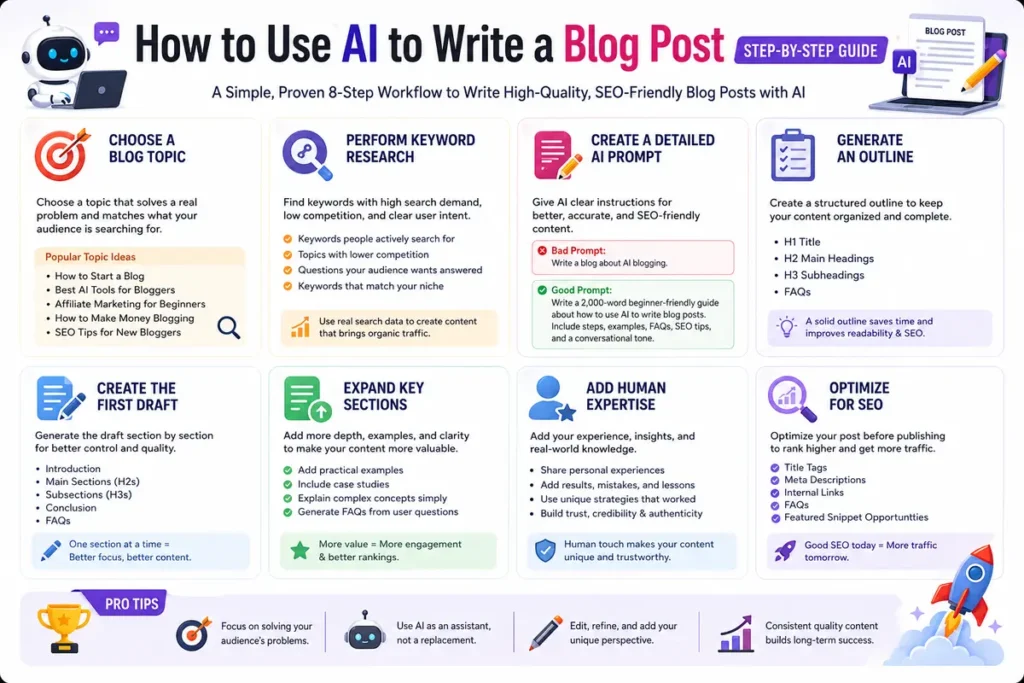
Fourth, ask AI to create a clear outline before writing the full article. A well-structured outline keeps your content organized, improves readability, and ensures you cover all important points your audience is looking for.
Your outline should include:
- H1 Title
- H2 Main Headings
- H3 Subheadings
- Frequently Asked Questions (FAQs)
Creating an outline first also helps you identify content gaps and plan the flow of your article before drafting begins. This simple step can save time during editing and make your content more SEO-friendly.
If you need help structuring your articles, check out our blog post outline template for a proven framework. You can also learn how to write SEO-friendly blog titles that attract more clicks from search results.
Step 5: Create the First Draft
Fifth, use AI to create the first draft section by section instead of generating the entire article in one prompt. This gives you better control over the content, improves accuracy, and allows you to expand important sections more effectively.
A simple approach is to generate:
- Introduction
- Main sections (H2s)
- Subsections (H3s)
- Conclusion
- FAQs
Working one section at a time also helps AI stay focused on the topic and reduces repetitive or generic content. In most cases, this method produces a higher-quality article that requires less editing later.
Once your draft is ready, the next step is refining it with examples, insights, and SEO improvements to make it more valuable for readers and search engines.
Step 6: Expand Key Sections
Next, use AI to make your draft more useful and informative by expanding important sections. A basic draft often covers only the surface level, so this step helps add depth, improve reader engagement, and increase the chances of ranking higher in search results.
Ask AI to:
- Add practical examples
- Include relevant case studies
- Explain complex concepts in simple language
- Generate FAQs based on user questions
For example, instead of simply explaining a concept, ask AI to provide a real-world scenario or step-by-step example. This makes your content easier to understand and more valuable for readers. The more helpful and detailed your content is, the longer visitors are likely to stay on your page.
Step 7: Add Human Expertise
Then, enhance your AI-generated draft with personal experience, unique insights, and practical knowledge. This is what makes your content different from thousands of other articles using the same AI tools.
For example, you might write:
I personally use ChatGPT to create outlines, Claude for long-form drafts, and Grammarly AI for final editing and readability improvements.
You can also share lessons learned, mistakes you’ve made, results you’ve achieved, or strategies that worked for you. These real-world insights build trust, improve credibility, and make your content more valuable to readers.
Most importantly, personal experience cannot be copied from competitors or generated by AI. It’s one of the strongest ways to demonstrate expertise and create content that stands out in search results.
Step 8: Optimize for SEO
Finally, optimize your blog post for search engines before publishing. Even great content can struggle to rank if basic SEO elements are missing. This step helps search engines understand your content and improves your chances of getting more organic traffic.
Make sure to optimize:
- Title tags
- Meta descriptions
- Internal links
- FAQs
- Featured snippet opportunities
Pay special attention to your target keyword placement, heading structure, and user experience. Small SEO improvements can make a big difference in how well your content performs over time.
For additional optimization tips, explore the best SEO tools for bloggers and follow a complete on-page SEO checklist before publishing. If you want to increase your chances of appearing in Google’s answer boxes, learn how to optimize blog posts for featured snippets as part of your SEO strategy.
How Do You Create Effective Prompts for AI Blog Writing?
Effective prompts provide AI with clear instructions, audience context, content goals, and formatting requirements. In most cases, the quality of your AI-generated content depends more on the prompt than the tool itself.
Prompt Framework
A simple formula is:
Role + Goal + Audience + Format + Tone + SEO Requirements
For example:
Act as an SEO expert. Write a 2,000-word guide on AI blogging for beginners. Use simple English, include FAQs, examples, and SEO best practices.
This type of prompt gives AI a clear direction and helps generate content that is more relevant, structured, and useful for readers.
Common Prompt Mistakes
Avoid these common errors:
- Using vague instructions
- Not defining the target audience
- Skipping content structure requirements
- Forgetting SEO guidelines
These mistakes often lead to generic content that requires significant editing later.
Better Prompt Example
Instead of asking AI to simply “write a blog post,” tell it exactly what you want, who the content is for, and how it should be structured. Clear prompts create better outputs. Better outputs require less editing.
If you want ready-made templates that save time and improve content quality, explore our collection of ChatGPT prompts for blogging for proven prompt examples.
How Can You Make AI-Generated Content Sound More Human?
Humanising AI content means adding real experience, unique insights, original examples, and thoughtful editing. While AI can create a solid draft, human input is what makes content trustworthy, engaging, and memorable.
Add Personal Experience
First, include your own experiences whenever possible. Personal stories and lessons learned help readers connect with your content and demonstrate real expertise.
For example:
My first AI-generated article took nearly three hours to edit because my prompts were too vague. Today, using a structured workflow, I can create and optimize a complete blog post in less than an hour.
Include Original Examples
Second, use examples based on real situations rather than generic explanations. Original examples make your content more relatable and help readers understand concepts more easily.
Fact-Check Every Claim
Third, verify important facts, statistics, and recommendations before publishing. AI can occasionally provide inaccurate or outdated information, so human review is essential.
Improve Readability
Fourth, make your content easier to read by using:
- Short paragraphs
- Bullet points
- Descriptive subheadings
- Real-world examples
- Tables where appropriate
These simple improvements enhance the reader experience and keep visitors engaged longer.
Readers trust content that feels authentic, helpful, and experience-driven. If you’d like a complete editing framework, check out our guide on how to humanise AI content and make your articles sound more natural and credible.
What Are the Best AI Tools for Blog Writing?
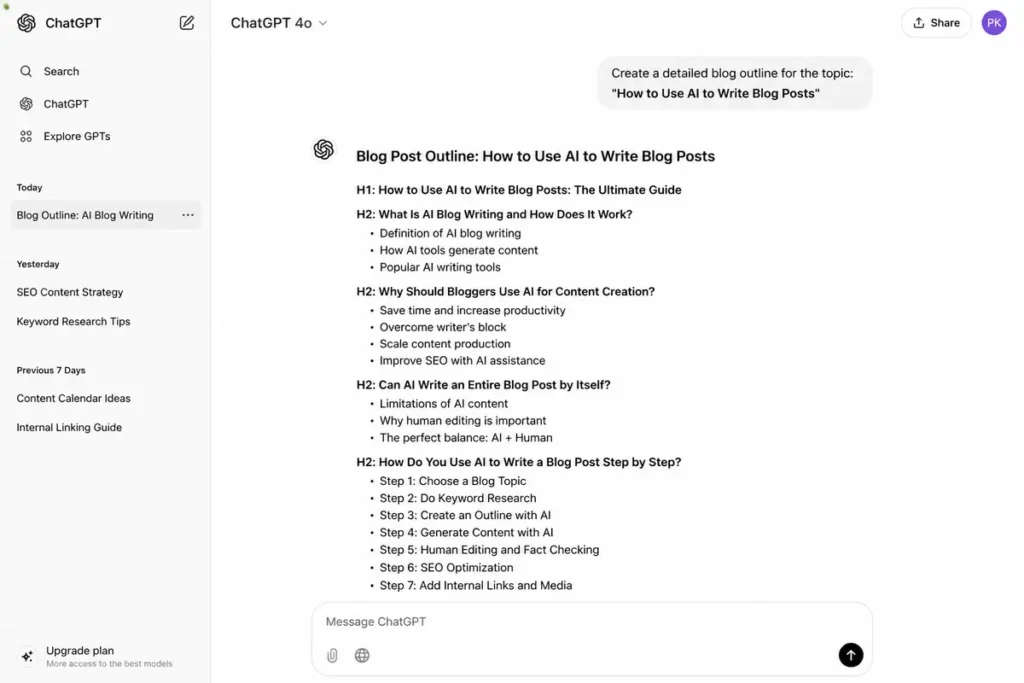
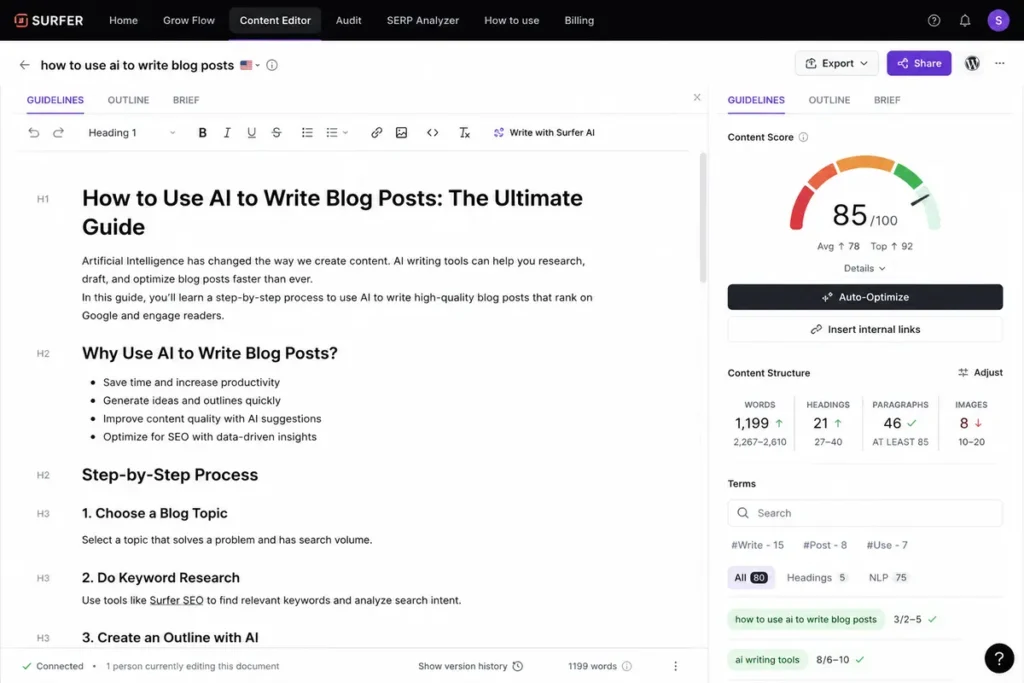
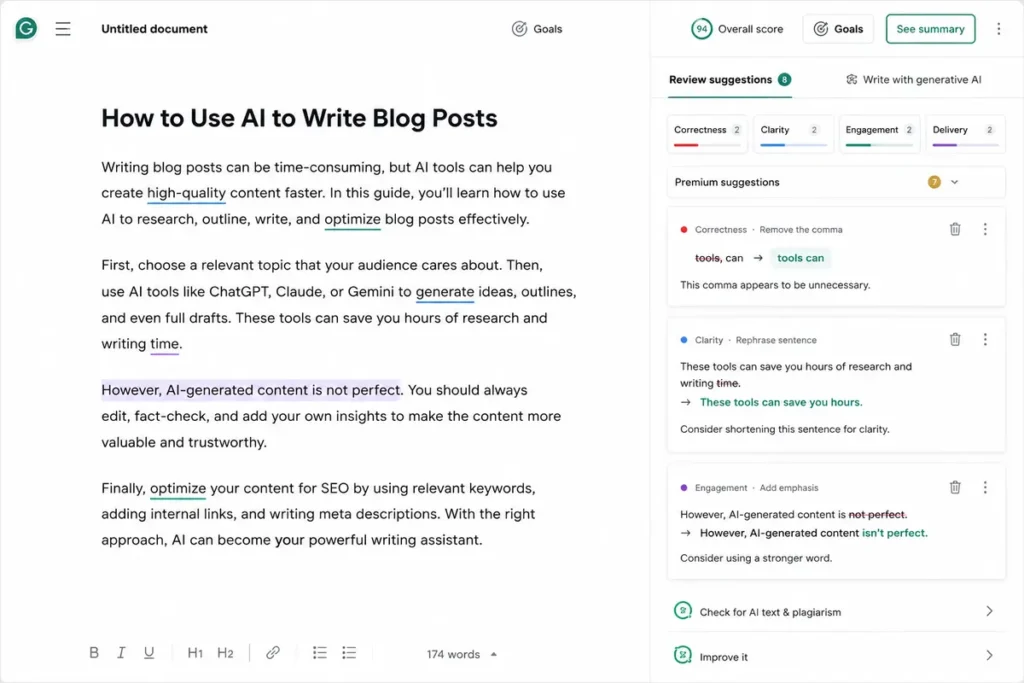
The best AI blogging tools combine content generation, editing, SEO optimisation, and workflow efficiency.
AI Tool Comparison
Tool | Strength | Best For |
ChatGPT | Flexible content creation | Bloggers |
Claude | Long-form writing | Detailed guides |
Gemini | Research assistance | Information gathering |
Jasper | Marketing workflows | Agencies |
Grammarly AI | Editing | Proofreading |
Surfer SEO | Optimization | SEO content |
According to TechRadar‘s AI writer analysis, businesses increasingly use AI writing assistants to improve productivity while maintaining human oversight.
Real Example: How I Write 10 Blog Posts in a Day Using AI
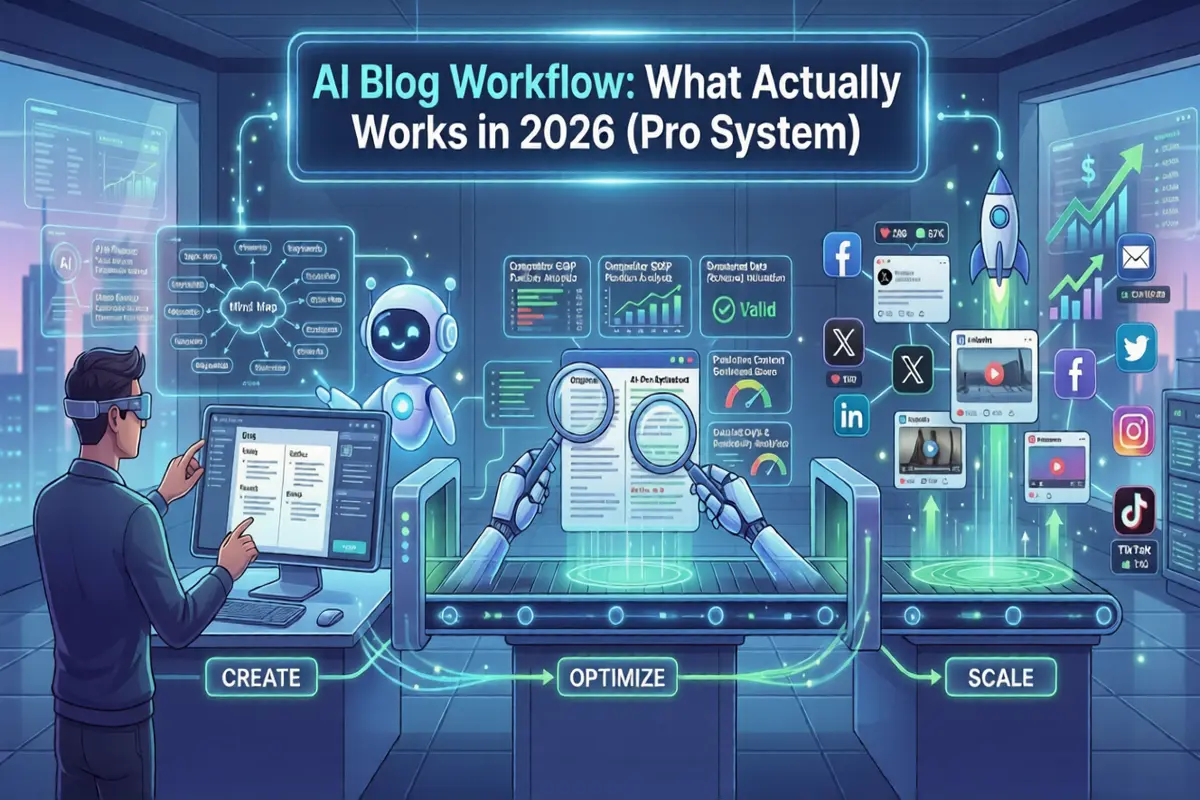
Writing 10 blog posts in a day is not about writing faster – it’s about following a repeatable system. Instead of completing one article from start to finish, I batch similar tasks together, which saves time, improves focus, and increases overall productivity.
Simple flow:
Keyword Research
↓
Prompt Creation
↓
Outline
↓
Draft
↓
Human Editing
↓
SEO Optimization
↓
Publishing
↓
Promotion
This workflow wasn’t built overnight. After testing different AI tools, prompt structures, and content systems, I found that batching similar tasks together consistently produced better results than writing one article from start to finish.
My Real Workflow
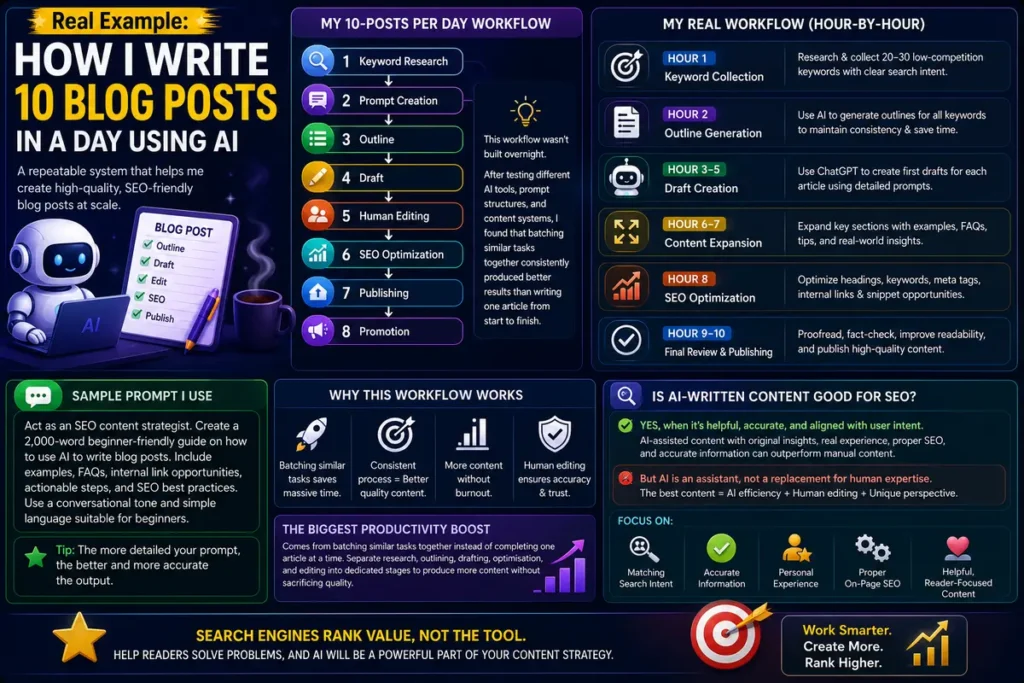
Hour 1: Keyword Collection
I start by researching and collecting 20–30 low-competition keywords with clear search intent. This gives me a list of topics that people are already searching for and helps ensure every article has traffic potential.
Hour 2: Outline Generation
Next, I use AI to generate outlines for each keyword. Creating all outlines at once helps maintain consistency and makes the drafting process much faster.
Hour 3–5: Draft Creation
Once the outlines are ready, I use ChatGPT to create the first draft for each article. Rather than writing complete posts manually, I focus on guiding AI with detailed prompts and reviewing the output as it is generated.
Hour 6–7: Content Expansion
After the drafts are complete, I expand key sections by adding examples, FAQs, practical tips, and real-world insights. This step transforms basic AI-generated content into something genuinely useful for readers.
Hour 8: SEO Optimization
Then, I optimize every article for search engines by improving headings, keyword placement, title tags, meta descriptions, internal links, and featured snippet opportunities.
Hour 9–10: Final Review and Publishing
Finally, I proofread each article, fact-check important information, improve readability, and publish the content. This final quality check is essential because AI-generated drafts still require human review.
Sample Prompt
“Act as an SEO content strategist. Create a 2,000-word beginner-friendly guide on how to use AI to write blog posts. Include examples, FAQs, internal link opportunities, actionable steps, and SEO best practices. Use a conversational tone and simple language suitable for beginners.”
The biggest productivity boost comes from batching similar tasks together instead of completing one article at a time. By separating research, outlining, drafting, optimisation, and editing into dedicated stages, I can produce significantly more content without sacrificing quality.
Is AI-Written Content Good for SEO?
AI-written content can perform very well in search results when it is helpful, accurate, and aligned with user intent. Search engines care more about the quality and usefulness of content than whether it was created by AI or written manually.
For example, an AI-assisted article that includes original insights, real-world experience, proper keyword optimization, and accurate information can easily outperform a manually written article that lacks depth or value.
However, AI should be used as a writing assistant rather than a complete replacement for human expertise. The best-performing content combines AI-generated efficiency with human editing, fact-checking, and unique perspectives.
To improve SEO performance, You Should focus on:
- Matching search intent
- Providing accurate information
- Adding personal experience
- Using proper on-page SEO
- Creating helpful, reader-focused content
Search engines rank value, not the tool used to create content. As long as your content genuinely helps readers solve a problem or answer a question, AI can be a powerful part of your content creation process.
What Mistakes Should You Avoid When Using AI for Blogging?
The biggest AI blogging mistakes happen when people rely on AI to do everything without adding human review, expertise, or SEO optimisation. While AI can speed up content creation, it cannot replace strategic thinking and real-world experience.
Avoid these common mistakes:
- Publishing raw AI-generated content without editing
- Ignoring keyword research and search intent
- Skipping fact-checking and source verification
- Using vague or weak prompts
- Forgetting internal linking opportunities
- Copying competitor content instead of adding unique value
For example, many beginners generate a complete article and publish it immediately. The result is often generic content that lacks originality, authority, and trustworthiness. Taking a little extra time to review, optimise, and personalise your content can make a significant difference in both rankings and reader engagement.
AI accelerates bad processes just as quickly as good ones. If your workflow includes strong research, detailed prompts, human editing, and proper SEO, AI can become a powerful tool for scaling high-quality content.
How Long Does It Take to Write a Blog Post Using AI?
Most bloggers can create a high-quality AI-assisted blog post in 30 to 90 minutes depending on complexity.
Typical breakdown:
Task | Time |
Research | 10-15 minutes |
Outline | 5 minutes |
Drafting | 15-30 minutes |
Editing | 15-30 minutes |
SEO Optimization | 10-15 minutes |
This workflow can dramatically increase publishing frequency while maintaining quality.
How Do Successful Bloggers Combine AI and Human Writing?
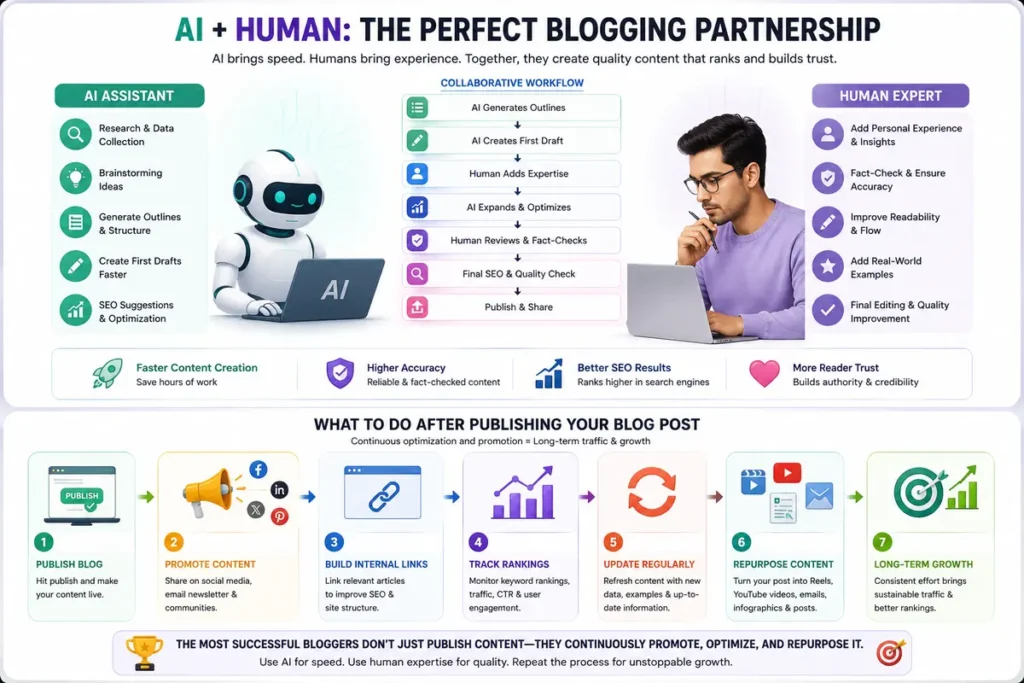
Successful bloggers use AI to increase speed and productivity while relying on human expertise to add accuracy, experience, and unique value. The goal is not to let AI replace the writer, but to use it as a powerful assistant throughout the content creation process.
The most effective workflow looks like this:
- AI generates outlines and first drafts
- Humans add personal insights and expertise
- AI helps with SEO optimization and content expansion
- Humans fact-check information and improve quality
For example, I use AI to handle research, brainstorming, and draft creation, but I always review every article manually. This allows me to add real-world experience, improve readability, and ensure the content genuinely helps readers.
The biggest advantage of this approach is that it combines the speed of AI with the trust and credibility that only human expertise can provide. As a result, the content feels more authentic, performs better in search engines, and delivers more value to readers.
AI tools are most effective when used as writing assistants rather than complete replacements for human writers. The bloggers who understand this balance are often the ones who scale content successfully without sacrificing quality.
What Should You Do After Publishing an AI-Assisted Blog Post?
Publishing your article is only the beginning. To get consistent traffic and better rankings, you need to promote, monitor, and improve your content over time.
Promote the Content
Start by sharing your blog post across multiple platforms to reach a wider audience and generate initial traffic.
Promote your content on:
- X (Twitter)
- Email newsletters
Even the best content needs visibility. A strong content marketing strategy for bloggers can help you attract more readers and maximize the value of every article you publish.
Build Internal Links
Next, add links from relevant existing articles on your website. Internal links help search engines understand your content structure and encourage visitors to explore more pages.
For best results, follow a proven internal linking strategy and connect related articles using descriptive anchor text.
Track Rankings
Monitor your content’s performance regularly to identify what is working and where improvements are needed.
Pay attention to:
- Keyword rankings
- Organic traffic
- Click-through rates (CTR)
- User engagement metrics
These insights can help you refine your content strategy and improve future articles.
Update Regularly
Search results change over time, so revisit important posts every few months. Updating statistics, examples, screenshots, and outdated information can help maintain rankings and improve user experience.
Repurpose Content
Finally, get more value from every blog post by turning it into multiple content formats.
You can repurpose articles into:
- Short-form Reels
- YouTube videos
- Email newsletters
- Social media posts
- Infographics
This approach allows you to reach different audiences while maximizing the return on the time you invested in creating the original content.
The most successful bloggers don’t just publish content – they continuously promote, optimize, and repurpose it to generate long-term results.
What's Next After Learning AI Blog Writing?
The next step is simple: create and publish your first AI-assisted blog post. Reading guides and watching tutorials can help, but real progress comes from taking action and improving through practice.
Start with this process:
- Choose one keyword
- Create a detailed outline
- Generate the first draft with AI
- Edit and optimize the content
- Publish the article
Then repeat the process consistently.
Don’t worry about creating the perfect blog post from day one. Every article you publish teaches you something new about writing, SEO, audience behavior, and content strategy. Over time, these small improvements compound into significant results.
Blogging success rarely comes from a single article. It comes from publishing useful content consistently over time. As your traffic grows, you can explore different blog monetization methods such as affiliate marketing, display ads, sponsored content, and digital products to turn your content into a long-term income source.
Frequently Asked Questions
Q1. Can I use AI to write an entire blog post?
Yes, AI can create a complete blog post, but human editing, fact-checking, and personal insights are essential to improve quality and trustworthiness.
Q2. What is the best AI tool for blog writing?
ChatGPT, Claude, Gemini, and Jasper are among the most popular AI writing tools. The best choice depends on your workflow and content needs.
Q3. Is AI-generated content good for SEO?
Yes, AI-generated content can rank well if it is helpful, accurate, optimized for search intent, and enhanced with human expertise.
Q4. How long does it take to write a blog post using AI?
With a structured workflow, most bloggers can create a high-quality AI-assisted blog post in 30–90 minutes, depending on the topic and level of research required.
Q5. Will AI replace human bloggers?
No. AI is a powerful writing assistant, but human creativity, experience, storytelling, and expertise are still essential for creating valuable content that readers trust.
Conclusion
AI blog writing is the process of using artificial intelligence tools to assist with researching, outlining, drafting, and optimizing content. When used correctly, AI can help you create high-quality blog posts faster, stay consistent, and scale your content production without sacrificing quality.
However, the most successful bloggers don’t rely on AI alone. They combine AI’s speed with human expertise, real-world experience, creativity, and strategic thinking to create content that readers trust and search engines reward.
If you’re just getting started, don’t overcomplicate the process. Choose one keyword, create one AI-assisted article, publish it, and learn from the results. Over time, your workflow, prompts, writing skills, and SEO knowledge will continue to improve.
Remember: AI creates drafts. Humans create authority.
Now I’d love to hear from you: Have you used AI to write blog posts yet? If yes, what’s your biggest challenge or favourite AI blogging tool? Let me know in the comments below!
Written by: Pratap Keshari Panda – Digital marketer, blogger, and SEO strategist who has used AI-assisted content workflows to create and optimize hundreds of blog posts across multiple niches.
Reviewed by: Editorial Review Team – SEO and content marketing specialists with expertise in blogging, search optimization, and AI-assisted publishing workflows.

 350+ Blog Guides Published