

Table of Contents
ToggleIntroduction
Getting traffic to a new blog using AI is no longer optional – it’s the only way to grow fast in today’s search landscape.
Here’s the reality:
Most blogs fail not because of bad content, but because they follow outdated SEO strategies while search has already shifted to AI-driven answers.
When I started using AI for blogging, I thought publishing more content would bring traffic – but in reality, nothing changed until I followed a proper system.
If your content is not optimized for AI visibility, it won’t get traffic – simple.
This guide is based on real blogging experience, proven strategies, and practical systems that actually work – not just theory.
Key Takeaways
- AI blog traffic is a system combining content, SEO, and automation to scale visibility.
- Long-tail keywords drive faster rankings than competitive keywords.
- Answer-first content structure increases AI citation probability.
- Content distribution is as important as content creation.
- Internal linking improves engagement and SEO performance.
What Is Getting Traffic to a New Blog Using AI?
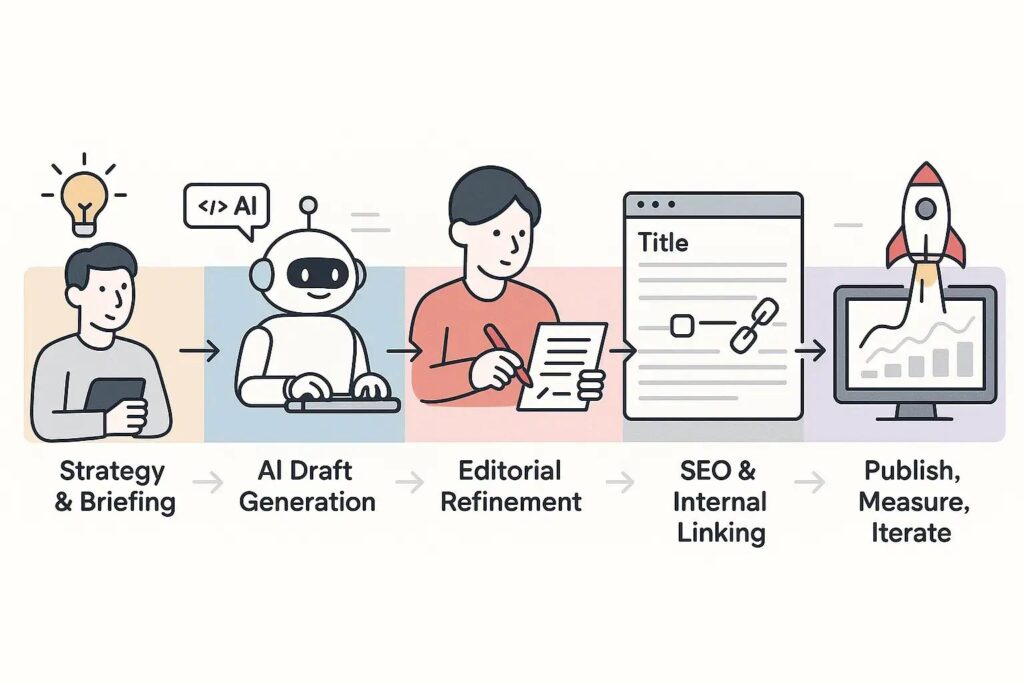
AI-driven blog traffic is the process of using artificial intelligence tools to increase website visibility, rankings, and user engagement.
First, this approach combines SEO, automation, and content intelligence to generate traffic faster than traditional blogging. For example, instead of manually researching keywords, AI tools analyze search intent and generate high-potential topics in seconds.
Second, AI keyword research involves analyzing search intent, identifying long-tail queries, and discovering content gaps using data-driven tools. This means you don’t guess – you follow data.
Third, AI also enables Answer Engine Optimization (AEO), where your content is structured so tools like ChatGPT or Google AI Overviews can directly quote it.
For example, a well-structured FAQ section can get picked up by AI tools and bring traffic without ranking #1.
If your goal is not just traffic but income, read our guide on AI tools to make money online for beginners
Why Getting Traffic Using AI Matters for New Blogs
Getting traffic using AI matters because it allows new blogs to compete with established websites faster and more efficiently.
First, AI drastically reduces time. Instead of spending weeks on SEO, you can publish optimized content daily.
- 65% of marketers report better SEO results using AI tools – Source: Semrush, 2025
- 86.5% of top-ranking pages already use AI-generated content – Source: Ahrefs, 2025
Second, search behavior is changing fast.
- 58.5% of searches are now zero-click – Source: GoodFirms, 2026
- AI traffic is growing 165x faster than organic search – Source: WebFX, 2025
This means: ranking alone is not enough – visibility inside AI answers is the new game.
Third, AI-optimized sites are more likely to be cited and discovered across platforms, not just Google.
If you’re just starting your blog, check out these best blogging niches for beginners that are easier to grow and monetize
How Does AI Help Increase Blog Traffic Faster Than Traditional SEO?
AI helps increase blog traffic faster by automating research, optimizing content, and scaling distribution simultaneously.
1. Keyword Discovery (AI)
AI keyword discovery means finding the exact topics people are already searching for using data, not guesswork.
AI tools analyze:
- Search intent (what people actually want)
- Long-tail keywords (easy to rank)
- Competitor gaps (what others missed)
Why it’s powerful:
- Saves hours of manual research
- Finds low competition + high traffic keywords
- Helps you target what actually ranks
Example:
Instead of targeting:
- “blog traffic” (too competitive)
AI suggests:
- “get traffic to new blog using AI without SEO”
Reality:
AI can analyze huge search data instantly and suggest better keywords than manual methods
2. Content Creation (AI + Human)

AI content creation means generating content fast, but improving it with human input so it actually ranks.
AI helps you:
- Generate blog drafts
- Create outlines
- Write faster
But human work is needed for:
- Adding real experience
- Improving clarity
- Making content unique
Why it matters:
- AI alone = generic
- AI + human = ranking content
Example:
- AI writes: basic article
- You add: examples, insights, structure
Final result:
As per my experience, AI Content becomes useful, not just readable
3. Optimization (SEO + AEO)
Optimisation means structuring your content so both Google and AI tools can easily understand and extract it.
This includes:
- Clear headings (H2, H3)
- Short paragraphs
- Answer-first sentences
- FAQ sections
Why this matters:
- Google ranks structured content better
- AI tools pick direct answers only
Example:
Instead of writing:
- Long paragraphs
Write:
- “AI SEO is the process of using AI tools to improve rankings.”
Reality:
- Modern SEO is shifting from keywords → AI answer visibility
4. Distribution (Automation)
Distribution means pushing your content to multiple platforms using AI instead of waiting for Google traffic.
AI helps you:
- Convert blog → Twitter thread
- Convert blog → LinkedIn post
- Convert blog → Pinterest pin
- Auto-schedule posts
Why it matters:
- Google traffic takes time
- Distribution gives instant traffic
Example:
1 blog post → becomes:
- 1 thread
- 3 posts
- 5 pins
Result:
One blog is equivalent to 10+ traffic sources
5. Engagement (Internal Linking)
Engagement means keeping users on your site longer using smart internal linking and content flow.
AI helps you:
- Suggest related articles
- Add internal links automatically
- Improve user journey
Why it matters:
- More time on site = better rankings
- More pages visited = more traffic
Example:
User reads:
- “AI traffic guide”
Then clicks:
- “AI keyword research”
- “AI content writing guide”
Result:
1 visitor = 3 page views
Blogs that follow structured systems outperform random content strategies every time.
Truth:
- Keyword alone won’t rank
- Content alone won’t rank
- AI alone won’t rank
In my experience, a proper System with AI rank and generate traffic.
To find the right keywords that actually rank, follow this AI keyword research guide for beginners step-by-step
How to Do Keyword Research Using AI for Blog Traffic?
AI keyword research is the process of finding high-intent, low-competition keywords using AI tools and data analysis.
Step 1: Find Long-Tail Keywords (Traffic Entry Point)
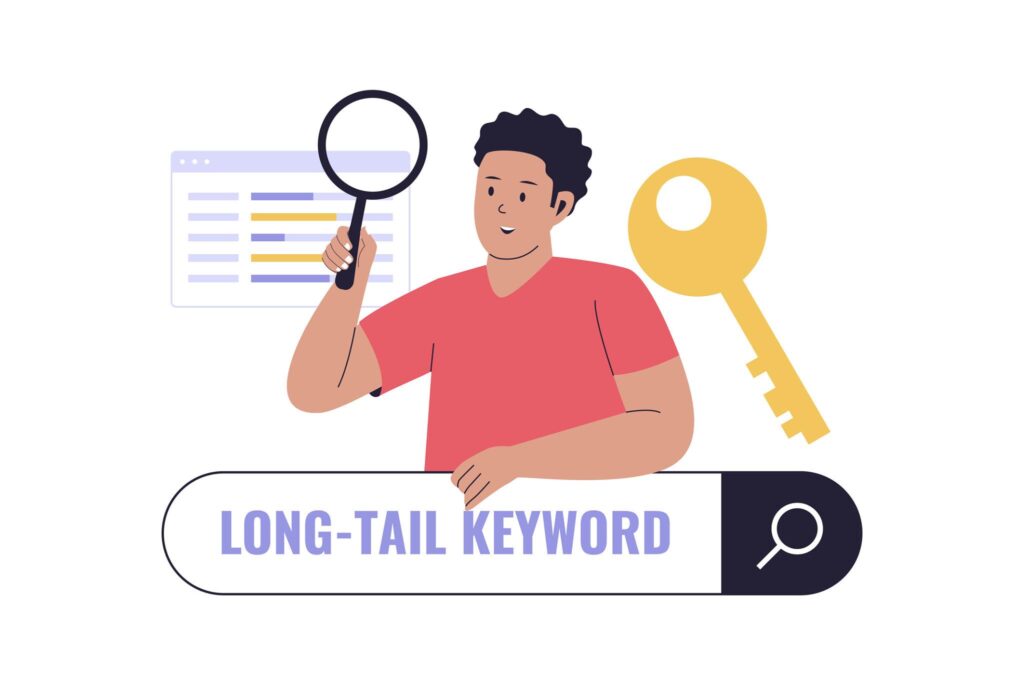
Long-tail keywords are specific search queries that are easier to rank and bring targeted traffic.
AI tools do 3 important things:
- Find low-competition keywords
- Suggest real user questions
- Generate variations you won’t think of manually
What you should do (action steps):
- Enter a main keyword (example: AI blog traffic)
- Let AI generate 20–50 related queries
Pick keywords that:
- Are specific (4–8 words)
- Solve a problem
- Sound like real searches
Examples:
- “get traffic to new blog fast without SEO”
- “how to grow blog using AI tools step by step”
Why this works:
- Long-tail keywords have less competition + higher intent
- AI tools analyze large datasets to find these patterns automatically
Simple rule:
More specific keyword = easier ranking + better traffic
Step 2: Identify Search Intent (THIS IS THE REAL GAME)
Search intent means understanding what the user actually wants when they search a keyword.
AI doesn’t just find keywords – it predicts why people search
AI systems analyze behavior and patterns to classify intent
3 Main Types You Must Know:
- Informational (learning intent)
- User wants knowledge
- Example: “how to increase blog traffic using AI”
You can Create:
- Guides
- Tutorials
- Step-by-step posts
- Transactional (buying intent)
- User wants to take action
- Example: “best AI tools for blog traffic”
Content type:
- Tool lists
- Reviews
- Comparisons
- Problem-Solving (pain intent)
- User has a problem
- Example: “Why my blog has no traffic”
Make:
- Fix-based articles
- Mistake guides
Why this step is critical:
Wrong intent = no traffic, even if you rank
Pro tip:
If your content doesn’t match intent:
- Google won’t rank it
- AI tools won’t pick it
Step 3: Build Topic Clusters (THIS BUILDS AUTHORITY)
Topic clustering means grouping related keywords into one main topic + multiple supporting articles.
Instead of writing random posts, you build a content system
How it works:
You create:
- Pillar Topic (Main Article)
- Broad topic
- Example: AI blog traffic
- Cluster Articles (Supporting Content)
- Specific subtopics
Example Structure:
Main Topic (Pillar) | Supporting Keywords (Clusters) |
AI blog traffic | AI SEO strategies, AI content optimization |
AI keyword research | long-tail keyword tools, keyword clustering |
Why this works:
- Search engines understand your expertise better
- AI systems connect related content
- Your site builds topical authority
Fact:
Topic clusters help search engines and AI understand your content as a complete subject, improving visibility across multiple queries
Real Example:
Instead of writing 1 post:
- “AI blog traffic”
You create:
- “How to get traffic using AI”
- “AI keyword research guide”
- “AI content optimization tips”
- “AI SEO strategies”
All interlinked → stronger ranking
Let’s simplify everything:
- Keywords = WHAT people search
- Intent = WHY they search
- Clusters = HOW you dominate the topic
Find specific keywords → match intent → build clusters → rank faster
Truth:
- Most beginners stop at keywords
- Smart bloggers focus on intent
- Top bloggers build clusters
To ensure your content is properly optimized, use this SEO-friendly blog post checklist for higher rankings and better structure
How to Optimize Blog Posts for AI Search and Featured Snippets?
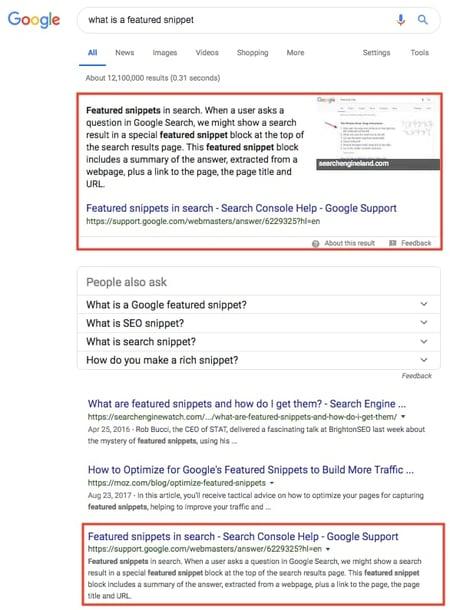
Optimizing for AI search means writing content in a way that AI tools and Google can easily extract and show as direct answers.
Why this matters:
Featured snippets are “position zero” answers shown at the top of search results
If your content is clear → Google and AI will pick it.
1. Use Answer-First Structure
Start every section with a clear, direct answer.
What to do:
- Define the first line
- Keep it simple and direct
Example:
- “AEO is the process of optimizing content for AI-generated answers.”
Why:
- Google picks clear answers, not long explanations
2. Add FAQ Sections
FAQs help your content match real user questions and increase snippet chances.
What to include:
- Common questions
- Short, direct answers
Example:
- How does AI help blogging?
- Can AI content rank?
Why:
- Google pulls answers from question-based content
3. Use Structured Formatting
Structured content makes it easier for search engines to understand and extract your content.
Use:
- Bullet points
- Tables
- Short paragraphs
Why:
- Structured data helps search engines understand content better and improves snippet chances
Example:
- Lists → list snippets
- Tables → table snippets
Clear answers + question format + structured content = higher chance of AI and featured snippet visibility
Truth:
Ignore:
- Long paragraphs
- Confusing writing
- No structure
Clear, structured, answer-focused content wins – always
To make your content fully optimized for Google and AI search, follow this on-page SEO optimization checklist for better rankings and structure
Can AI Content Rank on Google and Bring Traffic?
Yes – AI content can rank on Google and bring traffic, but only if it is high-quality, useful, and properly optimized.
Here’s the simple truth:
- Google does NOT care if content is written by AI or human
- Google only cares about quality, relevance, and usefulness
What actually works
- AI + human editing = high-ranking content
- Clear structure + real value = traffic
- Answer-focused content = AI visibility
Example:
A well-structured AI article with real insights can rank and even get featured in AI answers.
What does NOT work
- Raw AI content (no editing)
- Generic, repeated content
- No expertise or real examples
Reality:
Most AI content fails because it’s too shallow or generic, not because it’s AI
Important data
- 72% of SEOs say AI content performs equal or better than human content – Source: Semrush, 2026
- But purely AI content rarely reaches top positions without human improvement
AI content can rank and bring traffic, but only when combined with human expertise, proper structure, and real value.
Truth:
- AI alone ≠ ranking
- Content alone ≠ traffic
- Quality + system + optimization = results
How to Use AI for Content Distribution and Promotion?
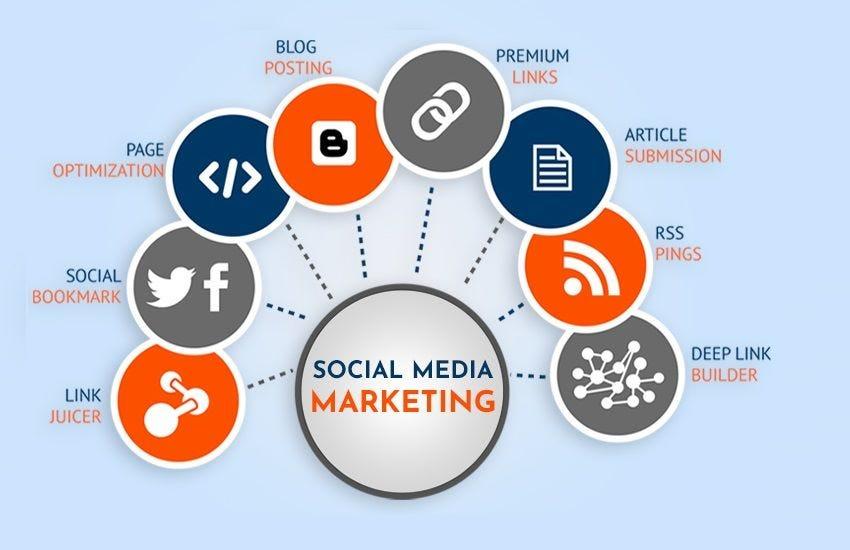
AI content distribution is the process of automatically sharing and repurposing content across platforms using AI tools.
- Social Media Automation
AI converts your blog into multiple social posts automatically.
You can create:
- Twitter threads
- LinkedIn posts
- Instagram captions
Example:
1 blog → 10+ posts → more reach
- Email Automation
AI writes and sends newsletters to your audience without manual work.
This helps you:
- Bring repeat visitors
- Build loyal readers
- Content Repurposing
AI turns one blog into multiple content formats.
You can convert into:
- Videos
- Shorts
- PDFs
Why these matters:
- More platforms = more traffic
- Less effort = more output
Important Data
- 93% of bloggers use social media to drive traffic — Source: Orbit Media, 2025
Create once → distribute everywhere → multiply traffic
Truth:
- Writing alone won’t bring traffic
- Distribution is what actually drives traffic
What Is AEO (Answer Engine Optimization) and Why It Matters?
Answer Engine Optimization (AEO) is the process of structuring content so AI tools like ChatGPT, Google AI Overviews, and Perplexity can directly extract and cite it as an answer.
Why AEO Matters
AEO is about being chosen as the answer—not just ranking on Google.
Key points:
- Visibility over clicks
Your content gets shown directly inside AI answers, not just search results - AI prefers clear, structured answers
AI tools select content that is easy to read, direct, and well-formatted - Direct answers = higher chances of being cited
Short, clear definitions are more likely to appear in AI responses
Example:
A simple line like:
“AEO is the process of optimizing content for AI-generated answers”
can get picked directly by AI tools.
SEO helps you rank – AEO helps you get quoted by AI
Truth:
- Ranking on Google is no longer enough
- If AI doesn’t pick your content → you lose visibility
- Clear, structured, answer-focused content wins in AEO
What Mistakes Kill Blog Traffic Even When Using AI?
Blog traffic fails when AI is used without a strategy, structure, and proper execution.
- Publishing Generic Content
Generic AI content doesn’t rank because it adds no new value.
Problem:
- Copying or rewriting existing articles
- No unique insights or examples
Reality:
Low-quality AI content often fails to rank and can even reduce site authority
Fix:
Add real experience, examples, and a better structure
- Ignoring Search Intent
Targeting the wrong intent means your content won’t match what users want.
Problem:
- Writing info content for buying keywords
- Choosing random keywords
Result:
No clicks, no rankings
Simple rule:
Right keyword + right intent = traffic
- No Distribution
Publishing without promotion means your content gets zero visibility.
Problem:
- Relying only on Google
- Not sharing content anywhere
Reality:
Content with no early engagement sends negative signals to Google and struggles to rank
Fix:
- Share on social media
- Repurpose content
- Use email
Bad content + wrong intent + no distribution = zero traffic (even with AI)
Truth:
- AI is not the problem
- Your strategy is the problem
What Are the Best AI Tools to Drive Traffic to a New Blog?
The best AI tools for blog traffic are those that help you find keywords, create content, optimize it, and distribute it efficiently.
In simple terms:
Each tool solves one step of the traffic system.
1. AI Writing Tools (Content Creation)
AI writing tools help you create blog posts faster without starting from scratch.
Popular tools:
- ChatGPT
- Jasper
- Writesonic
What they do:
- Generate blog drafts
- Create outlines
- Improve writing speed
Reality:
Modern AI tools can generate full articles, outlines, and marketing copy in seconds
2. SEO Optimization Tools (Ranking Boost)
SEO tools help you optimize content so it can rank on Google and AI search.
Popular tools:
- Surfer SEO
- Clearscope
- Rankability
What they do:
- Analyze top-ranking content
- Suggest keywords and structure
- Improve on-page SEO
Insight:
These tools use AI to analyze competitors and recommend improvements for better rankings
3. Keyword Research Tools (Traffic Foundation)
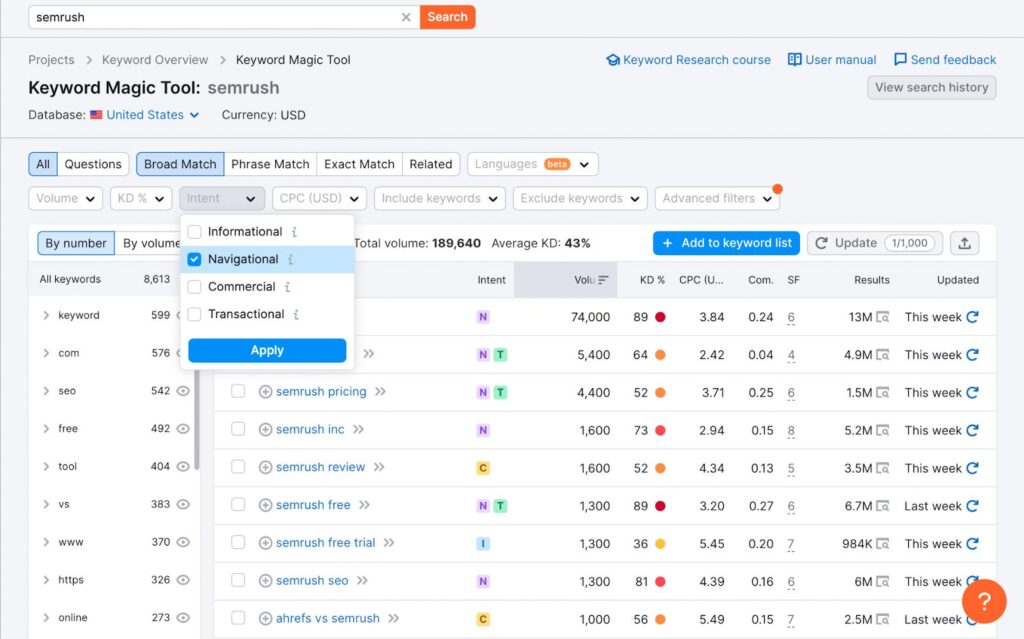
Keyword tools help you find what people are actually searching for.
Popular tools:
- SEMrush
- Ahrefs
- Ubersuggest
What they do:
- Find search volume
- Identify low-competition keywords
- Discover content ideas
Insight:
Using multiple AI keyword tools gives more accurate results than relying on one tool
4. Automation Tools (Traffic Multiplier)
Automation tools help you distribute content across platforms without manual work.
Popular tools:
- Zapier
- Buffer
- Zaptriq(Recomended)
What they do:
- Schedule posts
- Automate sharing
- Save time
Result:
One blog post can reach multiple platforms automatically
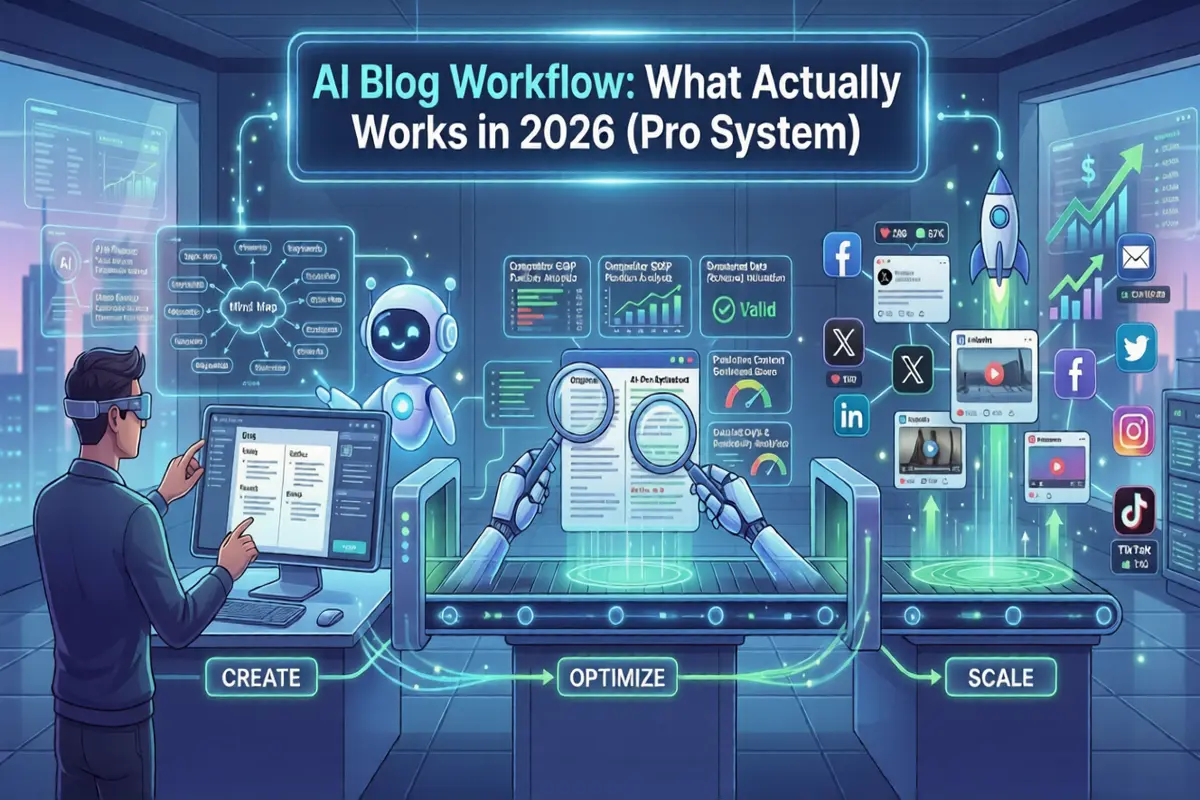
Real Example: AI Blog Traffic Workflow (Step-by-Step)
An AI blog traffic workflow is a repeatable system that converts keywords into traffic through structured execution.
Keyword → Content → Optimization → Distribution → Engagement → Traffic
Step-by-Step (Super Simple Explanation)
- Keyword Research
Find what people are searching (data-driven topics) - Content Creation
Create helpful content using AI + human input - Optimization
Structure content so Google + AI can understand it - Distribution
Share content across platforms for instant reach - Engagement
Keep users on site with internal links
Traffic is not random – it’s the result of a repeatable system.
Why This Works
AI workflows automate and improve every stage of content marketing—from research to distribution—making the process faster and more scalable
What to Do Next: 7-Day AI Blog Traffic Plan
A 7-day AI traffic plan is a simple execution roadmap to start generating traffic by taking consistent, focused actions.
Day 1–2: Research Phase
- Find low-competition keywords and build topic clusters to plan your content strategy.
This step decides what will rank and what will fail, so don’t rush it.
Day 3–5: Content Phase
- Write 2–3 optimized blog posts using AI + proper structure + real value.
Focus on quality + clarity, because better content ranks faster.
Day 6: Distribution Phase
- Promote your content across social media, email, and platforms for instant visibility.
Without distribution, even good content gets zero traffic.
Day 7: Optimization Phase
- Analyze performance and improve content based on data and user behavior.
Updating and improving content can significantly boost rankings over time
Research → Create → Promote → Improve = Traffic growth system
Reality Check
- There are 600M+ blogs and millions of posts daily – competition is massive
That’s why execution + consistency = your only advantage
Consistency beats perfection. Execution wins.
FAQs
Q1. How does AI help increase blog traffic faster?
AI helps increase blog traffic by automating keyword research, content creation, and distribution, allowing faster execution and better targeting.
Q2. Can a new blog get traffic using AI without SEO?
Yes, a new blog can get traffic using AI without traditional SEO by focusing on long-tail keywords, content distribution, and AI optimization (AEO).
Q3. What is the best way to use AI for blog traffic?
The best way to use AI for blog traffic is to follow a system: keyword research → content creation → optimization → distribution → engagement.
Q4. How long does it take to get traffic using AI?
Getting traffic using AI can take a few weeks to a few months depending on consistency and strategy.
Social distribution can bring early traffic, while SEO and AI visibility take longer to build.
Q5. What is AEO and why is it important for blog traffic?
Answer Engine Optimization (AEO) is the process of structuring content so AI tools can extract and show it as direct answers.
Conclusion
Getting traffic to a new blog using AI is not about using random tools – it’s about following a structured system that turns content into visibility.
Search has changed.
AI tools now give direct answers, which means only clear, structured, and optimized content gets visibility.
Most bloggers fail because they:
- Write content without a keyword strategy
- Ignore distribution
- Don’t follow a repeatable system
That’s exactly why they stay stuck.
- Writing more content won’t fix your traffic
- Using AI randomly won’t fix your traffic
- Following a system consistently will fix your traffic
Be honest
You’re reading this because your blog is not getting enough traffic yet…
So, tell me:
What’s your biggest problem right now?
- No traffic at all
- Writing content but not ranking
- Confused about AI tools
- Getting traffic but no clicks
AI is not a shortcut – it’s leverage.
Use it with a system, and your blog won’t just grow… it will compound.
Comment your answer – I’ll give you a direct, no-fluff fix based on your situation
Written by Pratap Keshari Panda
Founder of Digital Pratap | 5+ years in SEO & AI blogging | Helped beginners grow blogs from 0 to 10K+ traffic using AI systems

 350+ Blog Guides Published

1 Comment
[…] Traffic strategy: . “How to get traffic to a new blog using AI“. […]