
Table of Contents
ToggleIntroduction - Why Freelancing Is No Longer “Side Income”
A few years ago, freelancing was a temporary option for work.
Today, freelancing is a serious online business model.
People from all over the world are building a full-time income by selling skills online – without offices, without bosses, and without large investments.
However, most beginners fail not because freelancing doesn’t work, but because they start without clarity and structure.
In this guide, you will learn how to start freelance business online, explained step by step in very simple English, so you know exactly what to do and what to avoid.
Benefits of Starting a Freelance Business Online
Before jumping into steps, it’s important to understand why freelancing is worth considering.
Freelancing offers several strong advantages:
- Start with Very low startup cost
- Freedom to work from anywhere
- Skill-based income (no degree required)
- Flexible working hours
- Opportunity to grow income over time
Unlike jobs, freelancing rewards learning and execution, not seniority. The more skills offer more income with it.
Freelancing vs Job (Clear Comparison)
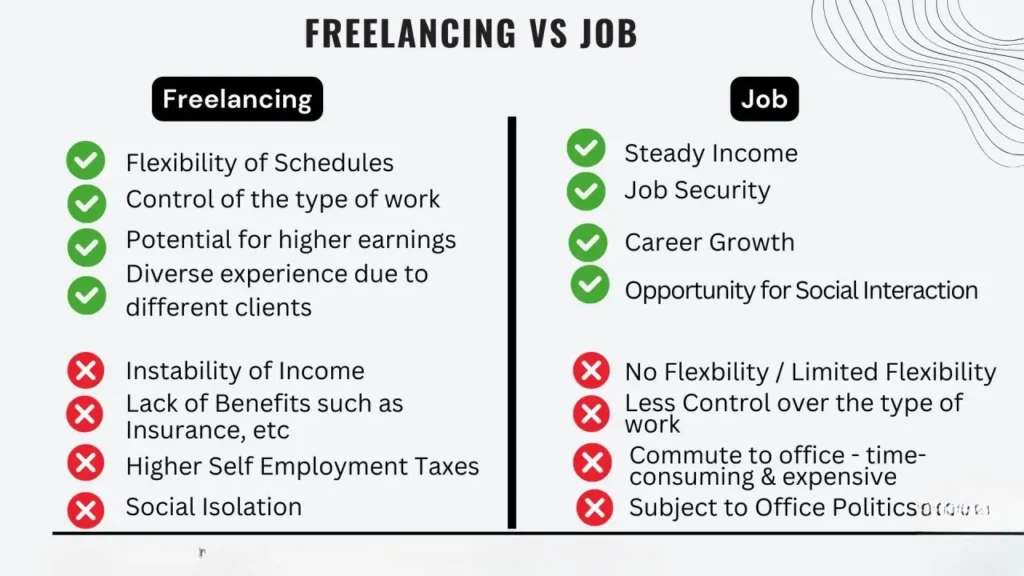
Many beginners feel confused about where freelancing fits. These are the difference table for your better understanding.
Freelancing is ideal if you want independence without heavy financial risk.
Many beginners struggle to choose between freelancing and blogging, so understanding the difference helps you decide which path suits your goals better.
Step 1: Choose ONE Skill (Most Important Decision)
The biggest mistake beginners make is trying to do everything.
Do not start with so many skills like:
- Writing + design + ads + video editing
This leads to confusion and slow progress.
There are so many skills in internet for earning.
But instead of so many skills, you should choose one skill that:
- Has demand in the market
- Can be learned practically
- That you can practice daily
Beginner-friendly freelance skills:
- Content writing for clients
- Graphic design
- Video editing
- Social media management
- Website setup (WordPress)
- Virtual assistance
In my opinion, choosing one skill increases your focus and confidence for healthy and long-term earnings.
Some of the most profitable freelance skills come from digital marketing, which makes learning the right skills a strong starting point.
Step 2: Learn the Skill Practically (Not Perfectly)
You do not need to be an expert to start freelancing.
You can start with one skill that boosts with your experience later.
Your goal should be in the beginning is:
- Understanding basics
- Practising with daily basis
- Improving gradually
A simple learning routine:
- Watch tutorials
- Practice on sample projects
- Improve one thing at a time
Always try to solve the client’s problem. Clients always pay for solutions, not perfection.
Day 17
As your freelance income grows, building an email list helps you create long-term stability instead of depending only on platforms.
Step 3: Decide Your Freelance Niche (Why This Changes Everything)
A niche means what particular you serve and what you solve. Choose one Niche that has demand in the market and master it.
Instead of saying:
“I am a freelancer who does everything”
You can say:
“I help bloggers write SEO-friendly articles”
Niche clarity helps:
- Clients trust you faster
- You stand out from the competition
- You charge better rates
This is why niche selection matters as much in freelancing as it does in blogging.
Step 4: Create a Simple Freelance Profile (No Overthinking)
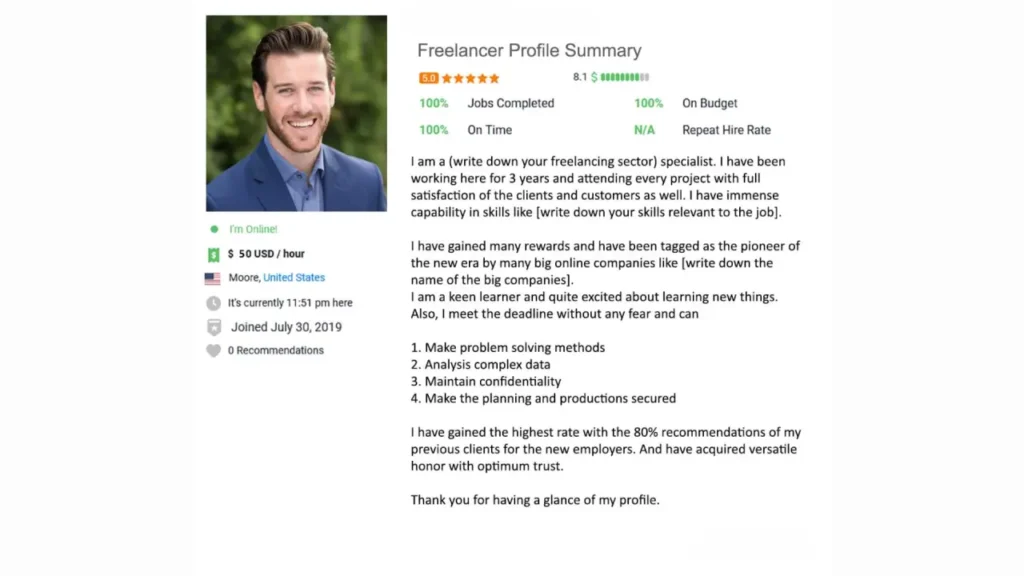
Many beginners waste so much time making perfect profiles.
You don’t need perfection. Perfection comes after your working experience.
You need clarity. So, maintain your services clearly in your profile.
Your profile should include:
- What service do you offer
- Who do you help
- How do you solve their problem
Example:
Instead of writing:
“Professional expert with 10+ years of experience”
You should write:
“I help small businesses write clear website content that customers understand.”
That’s a sign of honesty, and honesty builds trust. And trust helps you with your growth.
Step 5: Choose the Right Freelancing Platform
The best benefit of freelancing is that you don’t need to be everywhere. You can do your work anytime, anywhere in the world, without any pressure.
Start with one or two platforms only, that’s based on your interest.
Popular beginner-friendly platforms:
- Fiverr
- Upwork
- Freelancer
- PeoplePerHour
Learn how one platform works properly before expanding.
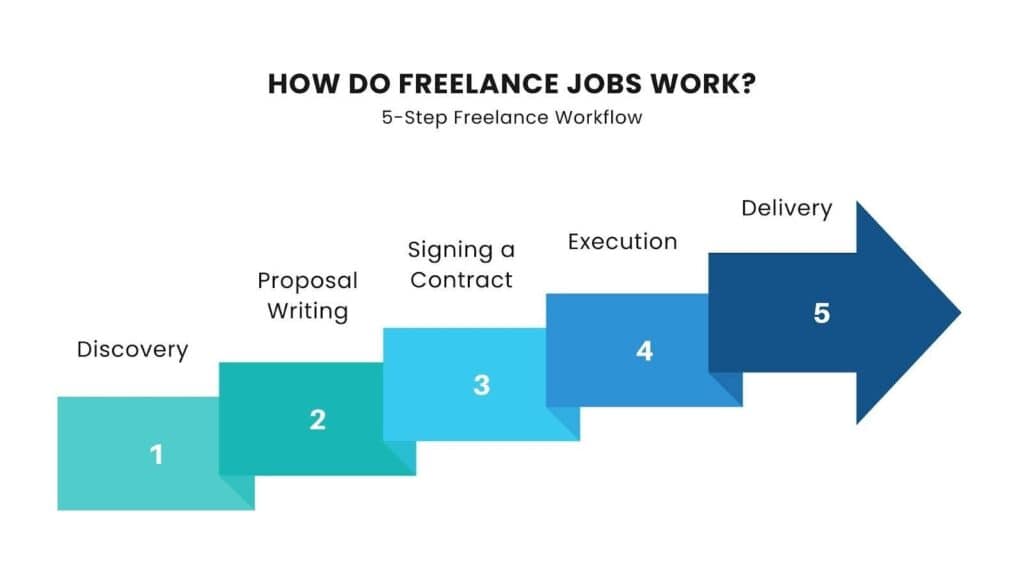
Step 6: How to Get Your First Freelance Client (Realistic Method)
Your first client will not come instantly. Its take time, but after your first client, one brings another.
To get your first client, you have to:
- Apply consistently in your work
- Write custom proposals
- Show understanding of client needs
- Give bonuses, Clients like it
Follow the simple proposal structure:
- Greet the client
- Mention their problem
- Explain how you can help them
- End politely
The most important thing is that your first client builds confidence and experience, not big money. But it is the way to make big money later.
Step 7: Pricing - Avoid These Two Extreme Mistakes

Beginners always make two pricing mistakes, but never compromise your service price.
Always Avoid:
- Charging too low (burnout)
- Charging too high (no clients)
Start with fairness:
- Fair beginner suitable pricing
- Increase gradually as skills improve
If you can solve your clients’ problems, then Pricing also improves with experience and results, not guesswork.
So, at the beginning, research your competitors’ prices and charge accordingly.
Step 8: Treat Freelancing Like a Business (Critical Mindset Shift)
Freelancing fails when it is treated casually. You should have a clear business mindset before starting it.
If you treat freelancing as:
- Occasional work → Your income stays unstable
But if you treat it as:
- A business → Your income grows steadily
Business mindset includes these important points:
- Fixed daily work time
- Skill improvement
- Client communication
- Long-term planning
As a result, your focus and consistency can give you a king-size life.
Tools like ChatGPT can support freelancers by improving productivity, research, and communication when used correctly.
Common Freelancing Mistakes Beginners Make
Mistake-free work always gives success.
So, avoid these early mistakes:
- Applying randomly
- Copy-pasting proposals
- Overpromising results
- Ignoring communication
- Quitting too early
Freelancing always rewards patience and consistency.
So, with patience and mistake-free work, you can lead to a long-term successful career.
How Freelancing Fits into Long-Term Online Income
Freelancing can be:
- A full-time income
- A side income
- A stepping stone to business
Many people start freelancing and later move into:
- Blogging
- Agencies
- Digital products
Freelancing builds skills, confidence, and an income base.
Freelancing is one of the most practical side hustles because it builds skills, income, and long-term opportunities together.
FAQs - Starting a Freelance Business Online
- Can beginners start freelancing with no experience?
Yes. Beginners can start with basic services and improve through real projects.
- How long does it take to get the first freelance client?
Usually, 2–4 weeks with consistent applications.
- Do I need a website to start freelancing?
No. A website helps later, but platforms are enough to earn in the beginning.
- Is freelancing a stable income?
It becomes stable when you build repeat clients and improve skills.
- Can freelancing become a full-time income?
Yes. Many freelancers turn it into full-time work within months.
Freelancing is not quick money, but it is real and scalable money. If you stay focused, learn continuously, and work consistently, freelancing can give you both freedom and income.
💬 Which freelance skill are you planning to start with first?
Comment below – I read and reply personally.

 350+ Blog Guides Published
6 Comments
[…] to work for yourself? Read our complete How to Start a Freelance Business Online guide and learn how to find clients, build your brand, and earn […]
[…] If you’re completely new, read this: “How to start freelancing from scratch“. […]
[…] 1. How to Start a Freelance Business Online (Beginner-Friendly, Step-by-Step Guide for 2026) […]
[…] Many freelancers eventually convert their skills into digital products to create passive income stre… […]
[…] beginners use Canva as their first freelance skill because it allows them to start offering simple services without technical […]
[…] freelancers use Instagram as a lead-generation platform to attract clients for their online […]